
Cocooning using TDAP vaccine. What To Do?
December 14 | Posted by mrossol | Critical Thinking, Disinformation, Health, Malone, MedicineThe old ACIP promoted it without data. Current data shows it does not work and may increase risk. It divides families. Grandparents pay the price. Leave cocooning for caterpillars.
Source: Cocooning using TDAP vaccine – by Dr. Robert W. Malone
|
|

 |
Leave the cocooning to the caterpillars.
“Cocooning” is a CDC-endorsed public health term used to describe the push to vaccinate grandparents (and other close family/caregivers) before visiting newborns. This promoted practice stems from public health efforts to protect vulnerable infants from serious infections, particularly whooping cough (pertussis), influenza, and, to a lesser extent, COVID-19 and RSV.
Current guidelines (e.g., CDC as of 2025) de-emphasize cocooning as a primary strategy due to implementation challenges (low uptake, incomplete “cocoons”) and limited evidence supporting standalone effectiveness. Maternal Tdap vaccination during pregnancy is now prioritized for direct antibody transfer to the infant. Cocooning is still suggested supplementally for close contacts but is “no longer widely recommended” as the main approach.
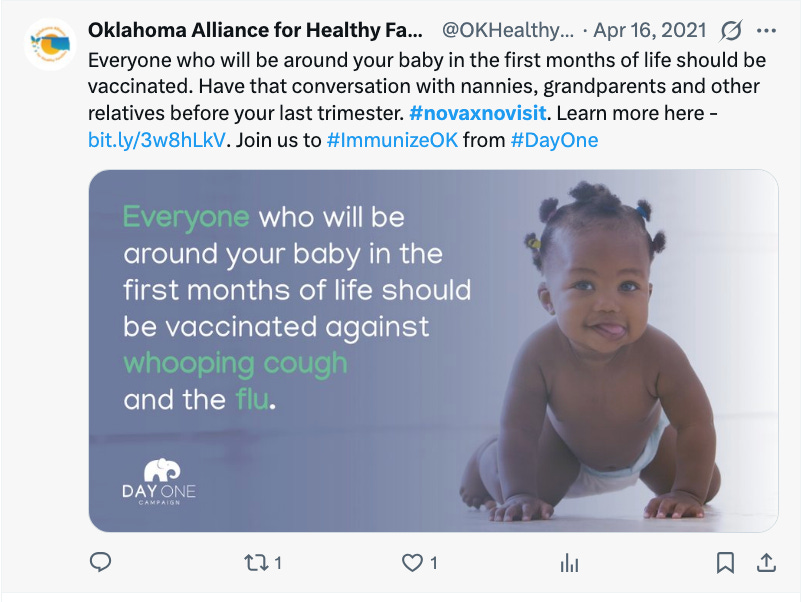
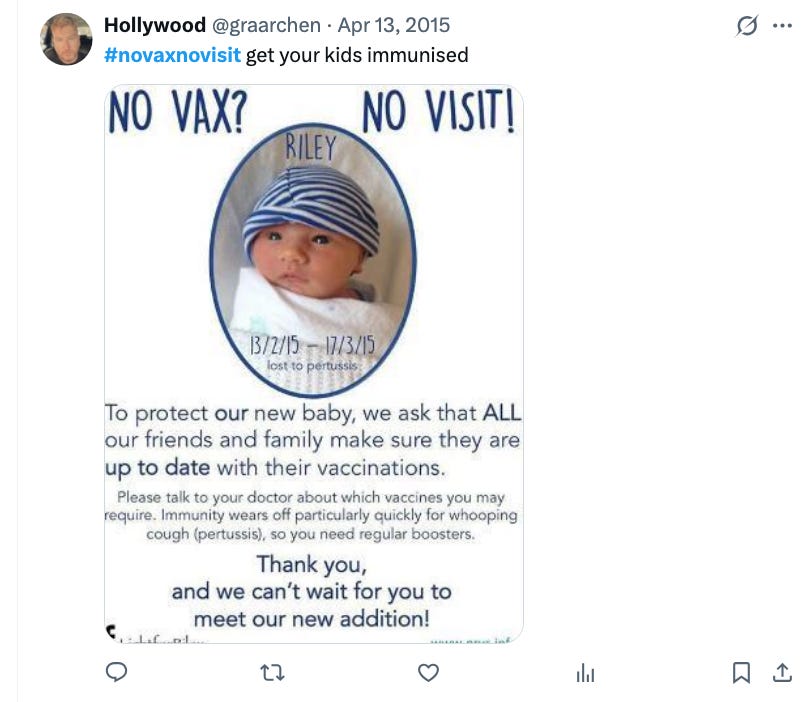
Many new parents enforce this privately, often requiring proof of vaccination for visits in the first 2-3 months. This has led to a promoted “#NoVaxNoVisit” trend on social media and parenting forums, where families delay or restrict access if relatives refuse. Compliance is high in supportive families, but resistance occurs (e.g., due to vaccine hesitancy or perceived overreach).
 |
 |
Although cocooning was the only strategy available to protect infants at the time it was recommended, there is now general agreement that the method is costly, is plagued with implementation challenges, and has uncertain effectiveness. Vaccination during pregnancy has been shown to be safe and effective at preventing infant disease in the early months of life and is being adopted by an increasing number of countries as the primary pertussis prevention strategy for young infants. Given the ongoing resurgence of pertussis in the United States, efforts should focus on increasing awareness and implementation of Tdap vaccination during pregnancy to prevent disease in infants too young to be vaccinated themselves.
An Assessment of the Cocooning Strategy for Preventing Infant Pertussis—United States, 2011
Clin Infect Dis. 2016 Dec 1;63(Suppl 4):S221–S226.
Core Recommendation regarding the “Cocooning” Strategy: Health authorities like the CDC, American Academy of Pediatrics, and similar organizations promote “cocooning,” where adults in regular contact with a newborn are recommended to get vaccinated to create a protective barrier. This began in the mid-2000s amid pertussis outbreaks, as infants under 2-6 months are too young for their own vaccines and face high risks of hospitalization or death from these diseases.
The promoted cocooning recommendations include the following:
- Tdap vaccine (tetanus, diphtheria, acellular pertussis): Strongly recommended for grandparents and caregivers if not received in the last 5-10 years (protection wanes over time). Administer at least 2 weeks before contact to build immunity. Pertussis is the primary focus, as it can be fatal in newborns.
- Influenza (flu) vaccine: Annual shot recommended for anyone around the baby, especially during flu season, as infants under 6 months can’t get it themselves.
- COVID-19 vaccine/boosters: Advised to be up-to-date, though less universally mandated than Tdap/flu.
- Other vaccines (e.g., MMR for measles, pneumococcal, shingles, RSV if eligible for older adults) are often suggested for broader protection.
Rationale and Evidence (the world according to GROK)
Newborns have underdeveloped immune systems, making them highly susceptible. Studies show parents/siblings are the most common infection sources, but grandparents and other visitors contribute significantly. Cocooning, combined with maternal vaccination during pregnancy, reduces infant pertussis risk substantially (e.g., one study estimated 64-77% effectiveness when both parents are vaccinated postpartum). Health sites (CDC, March of Dimes, Cleveland Clinic) and pediatricians routinely advise this, framing it as equivalent to basic precautions like handwashing.
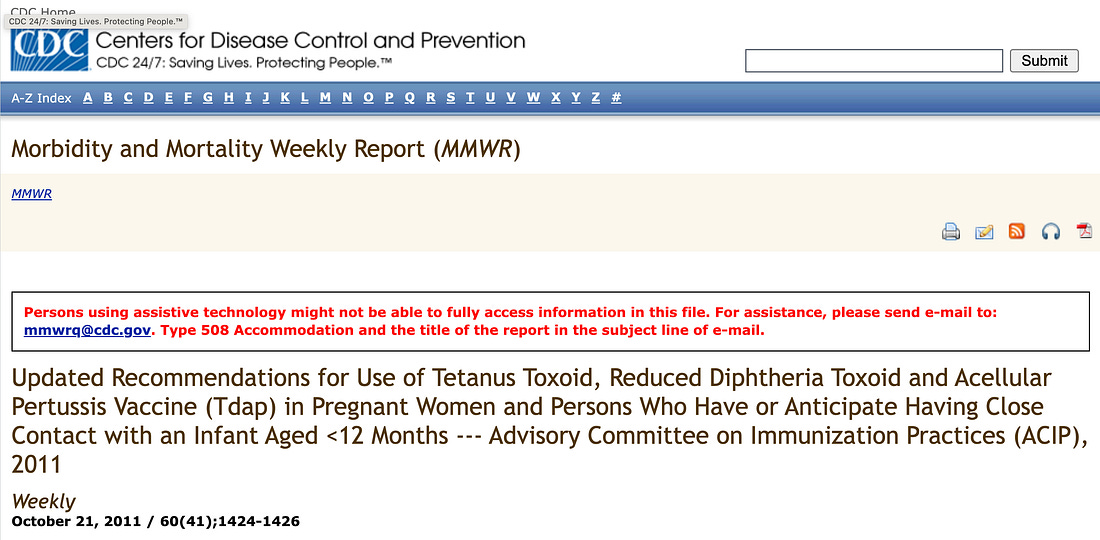 |
Cocooning is defined as the strategy of vaccinating pregnant women immediately postpartum and all other close contacts of infants aged <12 months with Tdap to reduce the risk for transmission of pertussis to infants. Cocooning has been recommended by ACIP since 2005. Cocooning programs have achieved moderate postpartum coverage among mothers but have had limited success in vaccinating fathers or other family members (3) (CDC, unpublished data, 2011).
Programmatic challenges make implementation of cocooning programs complex and also impede program expansion and sustainability (2). The effectiveness of vaccinating postpartum mothers and close contacts to protect infants from pertussis is not yet known, but the delay in antibody response among those vaccinated with Tdap after an infant’s birth might result in insufficient protection to infants during the first weeks of life (21).
ACIP concluded that cocooning alone is an insufficient strategy to prevent pertussis morbidity and mortality in newborn infants. Regardless, ACIP concluded that cocooning likely provides indirect protection to infants and firmly supports vaccination with Tdap for unvaccinated persons who anticipate close contact with an infant.
In other words, there is no evidence that cocooning to prevent pertussis is effective, but historically (2011) the ACIP recommended it, because why not?
What could possibly go wrong?
Promotion
There is no documented evidence that vaccine manufacturers (such as GSK or Sanofi Pasteur, producers of Boostrix and Adacel Tdap vaccines) have actively promoted the cocooning strategy for pertussis prevention.
Public health authorities and Medical Guilds (AAP) primarily promoted cocooning (emphasizing- without supporting data- vaccinating close contacts like parents, grandparents, and caregivers with Tdap to protect newborns).
Organizations promoting this practice include:
- Centers for Disease Control and Prevention (CDC) and Advisory Committee on Immunization Practices (ACIP): Originated and strongly promoted cocooning starting in 2006. Current guidelines (as of 2025) acknowledge its challenges (difficulty and cost in achieving full coverage) but continue to recommend Tdap for those with expected close contact with infants, ideally at least 2 weeks before exposure.
- American Academy of Pediatrics (AAP): Promotes cocooning through resources like HealthyChildren.org and publications (e.g., Red Book and policy statements). Emphasizes surrounding newborns with immunized individuals to reduce transmission risk.
- Global Pertussis Initiative (GPI): An international expert group that has reviewed and supported cocooning as a strategy to decrease pertussis transmission to infants, particularly when maternal vaccination is not feasible.
- Other countries (e.g., Australia, Canada, UK, France): National health authorities have implemented or recommended cocooning in the past, often funded programs for new parents, though many now prioritize maternal Tdap in pregnancy due to better evidence of effectiveness.
The promotion of this practice emerged in the mid-2000s amid pertussis resurgence and was recommended starting around 2005–2008 in the US and elsewhere. Promotion came through official guidelines, healthcare provider recommendations, and public awareness campaigns from these entities, but not through manufacturer-led marketing. Cocooning was a public health-driven initiative. Any increased vaccine use from it is a byproduct of independent expert recommendations.
Controversy
Critics argue cocooning has limited added benefit if the mother was vaccinated during pregnancy (which passes antibodies directly to the baby and is now the primary strategy).
These strict requirements are divisive, potentially causing family strain or isolation for new parents. Discussions on forums like Reddit highlight tensions, with some grandparents feeling sorrow at the loss of access and parents prioritizing infant safety and control. Ultimately, it’s a parental decision; no legal mandate exists, but it’s widely endorsed by “medical experts” as a low-risk way to prevent preventable harm. Yet, after two decades of endorsing this policy, the evidence still does not support cocooning. But cocooning does cause family rifts and tensions. It is not low-risk; there are very real psychological risks to both infant and mother.
There is limited scientific evidence documenting significant adverse social effects—such as family conflicts, rifts, or estrangement—specifically from the cocooning strategy to prevent infant pertussis. There are peer-reviewed papers on social and familial impacts when grandparents are not involved in an infant’s early life, but this aspect has not been studied systematically. Grandparent bonding with the infant is strengthened by immediate access. By denying grandparents and other family members a role in the birth process, nuclear family bonds are weakened.
Furthermore, postpartum depression is real. Encouraging young parents to deny grandparents the opportunity to interact with the young family can cause significant harm. Who better to help a young mother with the raising of an infant, than a grandmother?
Anecdotal reports of family tension (e.g., grandparents feeling excluded or parents enforcing “no vaccine, no visit” rules) exist in parenting forums, social media, and opinion pieces, but these are more prominently associated with COVID-19 vaccine mandates or general childhood vaccination disputes rather than pertussis cocooning specifically. Although specifically recommended by ACIP and CDC, pertussis cocooning recommendations are advisory (not mandated), and enforcement is private (parental decision), which may reduce overt conflict compared to stricter policies.
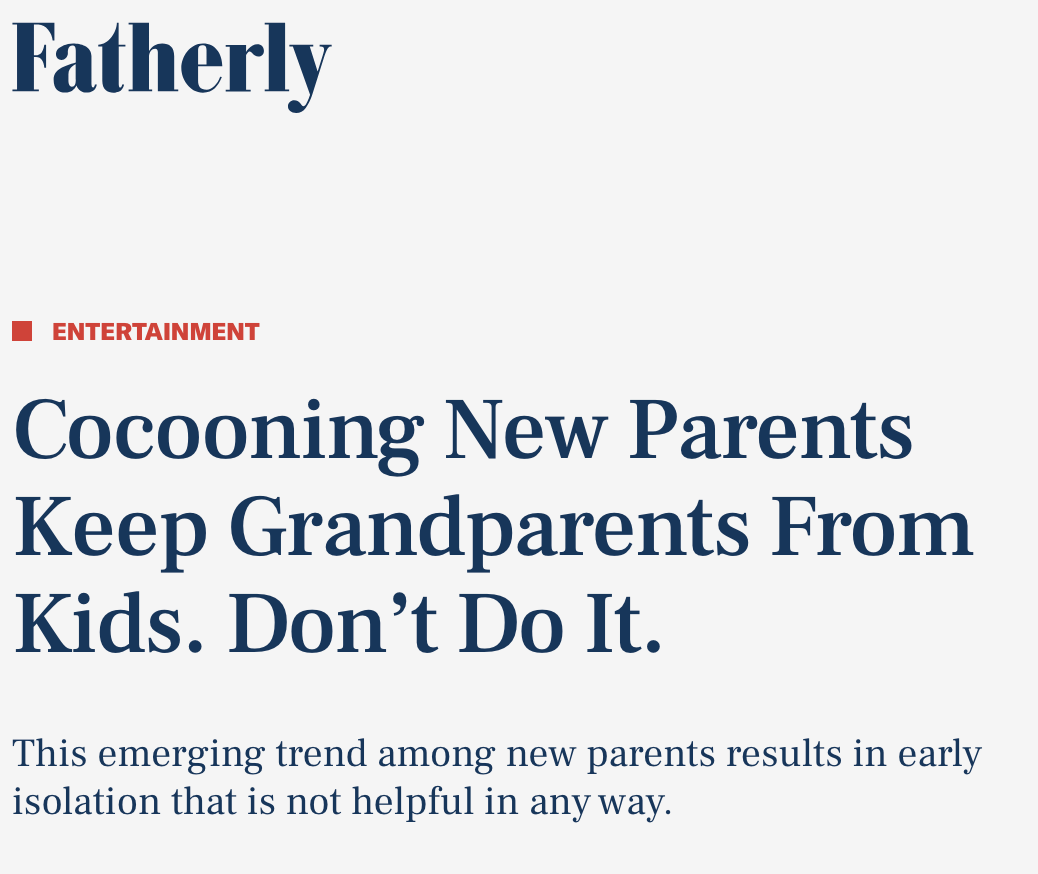 |
Cocooning is a trend among new parents, describing the act of bringing a newborn home from the hospital and living in isolation for the first weeks (and even months). Thus, their home is a cocoon, you see. It is impervious, particularly to well wishes. And grandparents. But while cocooning may sound like a blissful practice where parents can orient to their new life — and, I guess, reduce themselves to a cellular jelly which will eventually reform into a beautiful butterfly of a family — it’s not a great idea.
Help is good. Grandparents are good. And parenting is cripplingly lonely enough as it is.
The impulse makes sense in the abstract. There would appear to be a lot of good reasons to cocoon. For one thing, isolation protects the baby from any rogue pathogens that visitors could carry in. For another thing — bonding! Also, everyone is tired and you’re not going to get out of your sweatpants or comb your hair for a couple of weeks. Finally, some grandparents are just too much, you know?
And sure, all of those things may be true, but there are some other crucial considerations. For instance, there is a theory that grandparents literally allowed our species to evolve and thrive by providing care. You might not think your own mom could possibly help anyone evolve, but refusing her willingness to assist would be foolhardy. After all, it’s hard to bond when you also have to do dishes and laundry and probably clean the house so your baby doesn’t grow up in a cesspool of early family mess. These are all things grandparents can, and should, do.
Also, it’s important to foster a child’s relationship with their grandparents. A child that is close to their grandparents will develop a greater sense of social responsibility. Grandparents who are close and engaged help children recognize the importance of service to one’s family. Also, spending time with older adults makes children less ageist.
But all of that pales to the one reason that cocooning is ultimately ill-advised. Modern parenting is becoming increasingly insular. Families are becoming more isolated from each other and their own communities. This makes parenting more anxiety-ridden, costly and lonely. That isolation, anxiety, and cost can contribute to struggles with mental health, which can ultimately weaken marriages. Cocooning creates isolation from the outset, rather than orienting a family towards their community.
Families should not be closing themselves off from friends and family in those first weeks. Rather, they should be building connections. They should be leveraging their relationships to secure help and create bonds with people that will make parenting easier in the future.
Does that mean that parents need to place bonding with a newborn on a backburner? No. It’s a matter of calling in reinforcements. If people want to see the baby, they can do a load of laundry or wash the dishes. If grandparents want to camp out, they can also cook dinners and take some diaper duty. That will free up parents to spend time doing the important work of loving their child. That’s how we’ve raised our children for the vast arc of human history. And in the end, that’s the best argument.
Families are made of people. Leave the cocooning to the caterpillars.
 |
To repeat:
Families are made of people. Leave the cocooning to the caterpillars.
Malone News is a reader-supported publication. To receive new posts and support my work, consider becoming a free or paid subscriber.
 Subscribed



Leave a Reply
You must be logged in to post a comment.