
C&C. WW III, CYBER STYLE.
November 22 | Posted by mrossol | At War USA, Childers, Experts, Military, Western Civilization, WW 3| JEFF CHILDERS NOV 22∙PAID |
I think Childers is probably correct; some version of cyber WW3 is upon us. Then again, maybe its another one of those conspiracy theories. mrossol
🌍🇺🇸 ESSENTIAL NEWS AND COMMENTARY🇺🇸🌍
🔥🔥🔥
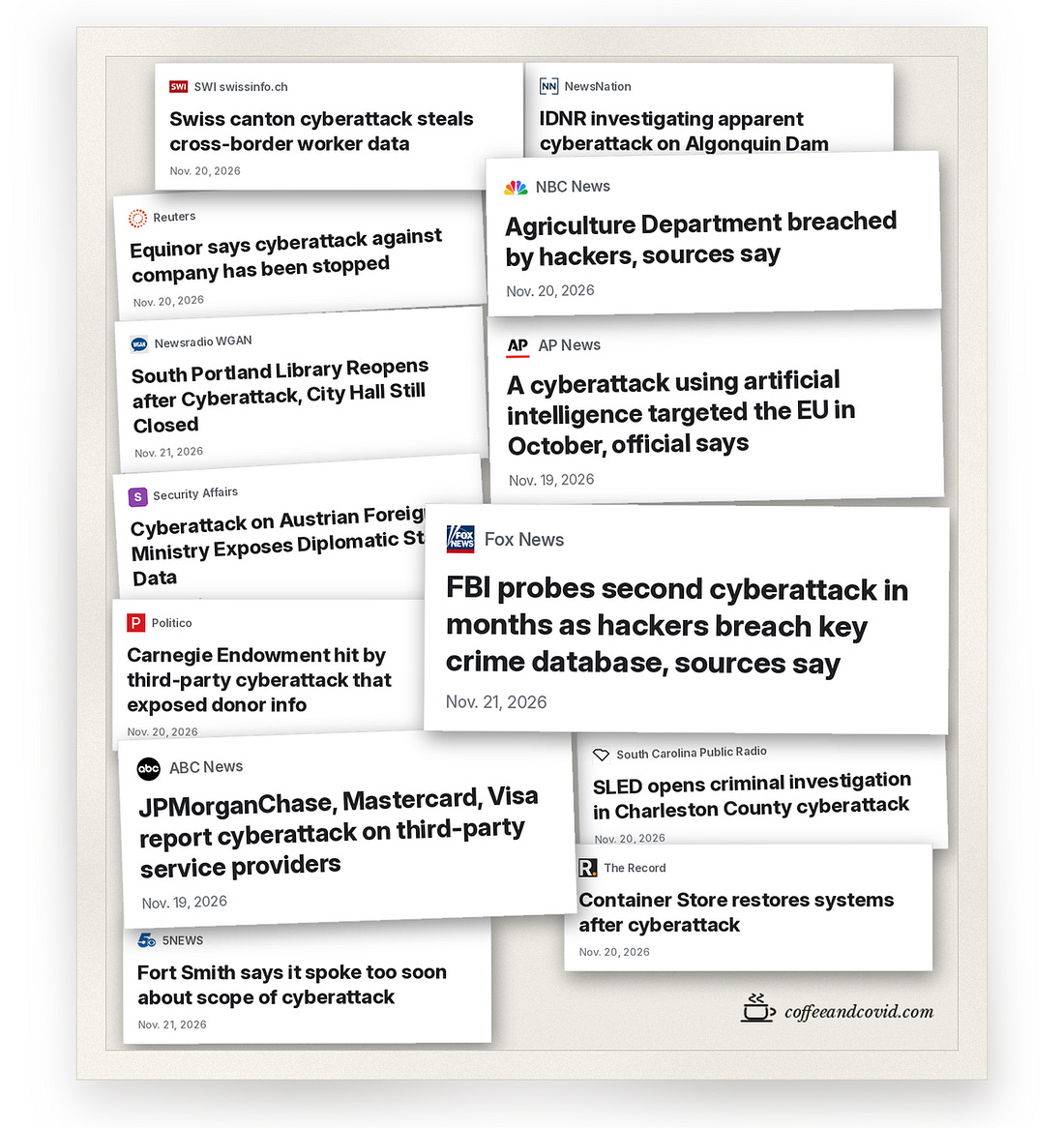
Welp! That didn’t last long. It only took three days to flip the entire glitch script. On Wednesday afternoon, the White House published an official dispatch with the soothing, institutional lullaby-like title: “‘No Indication of a Cyberattack’: DNI Clayton and Secretary Rubio on Recent Tech Outages.” That was Wednesday. By the end of the day yesterday, the nation was confronted by a giant stack of hacking headlines:
I wonder whether they wish they’d never held that Wednesday press conference. Following a week in which the FAA grounded every commercial airliner in America, Microsoft blacked out, Chase Bank hiccupped, and the National Security Agency’s classified internal network (NSANet) mysteriously ‘degraded’ during “scheduled maintenance,” Director of National Intelligence Jay Clayton delivered warm milk to the masses.
“We are not under systemic attack,” Secretary Rubio purred reassuringly. Clayton added, “Every indicator we have is that every single one of these events has an explanation or a cause that has nothing to do with a cyber-criminal, has nothing to do with a hostile actor or another country… The American people should have confidence in that.” Thank goodness!
But… why were systems crashing? Because, Clayton happily beamed, America was winning so hard at “Super Intelligence” that everybody was patching software at once: “We’re going to come out the other side much better.” (Except for those cruise-ship seniors, but never mind. At least they got some cardio.)
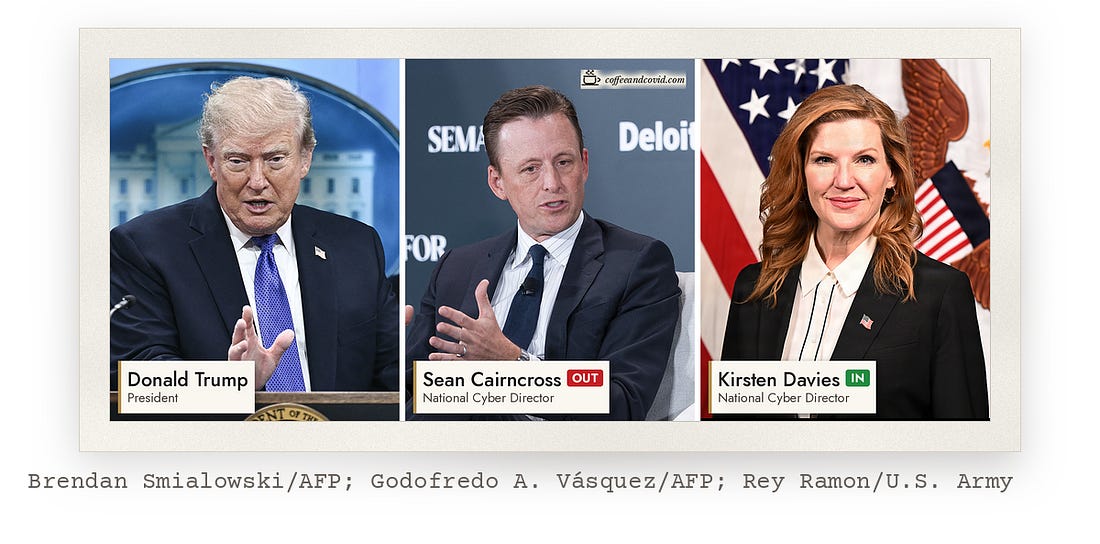
One day later, to celebrate how wonderfully all the routine patching was going, President Trump fired National Cyber Director Sean Cairncross. Asked Friday why he sacked his cyber chief in the middle of a non-crisis, Trump classically quipped, “Because I didn’t think that person was good enough.”
Cairncross, a former RNC lawyer with zero prior cyber background whose March strategy paper vowed to “defeat cyber adversaries before they breach our networks,” issued a statement calling his defenestration “the honor of a lifetime.” He was replaced by Kirsten Davies, the Pentagon’s chief information officer and a career corporate security chief. Mark that.
Meanwhile, the useless media mocked everybody for wondering if we were under a massive cyberattack. One illustrative headline from TechRadar, published four days ago on November 18th, called it a “series of unfortunate tech outages.”
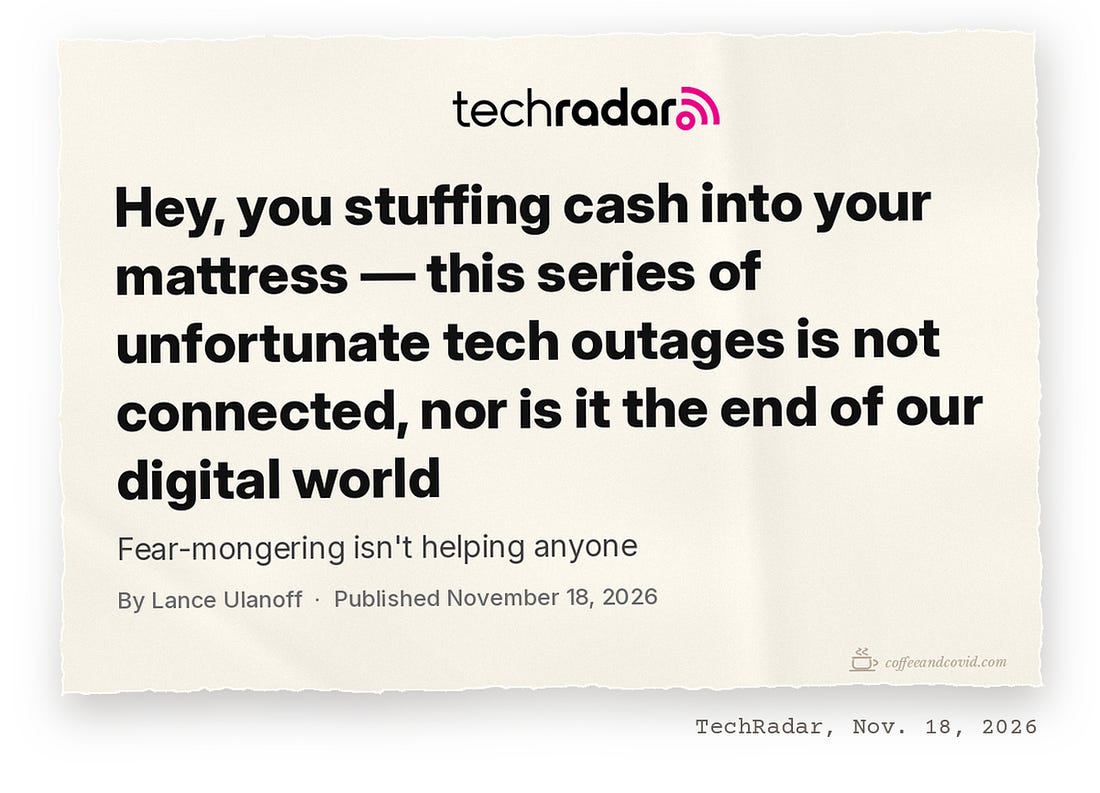
TechRadar’s Editor-at-large Lance Ulanoff opened his bedtime story with a tender little vignette of himself reassuring a nervous civilian who noticed that airlines, banks, Microsoft, and Apple had all ‘glitches’ in the same week. “I know, it’s an incredible coincidence, but that’s also all it is, a coincidence,” he told her soothingly. “She breathed a sigh of relief,” Ulanoff crowed, “and I could actually see the stress leaving her face.”
For proof, Ulanoff cited —I am not making this up— the corporate press releases. Apple blamed an “internal update.” The FAA blamed “one very overactive router.” Chase Bank blamed a software release. “For now,” reporter Ulanoff concluded, “despite the past calamitous tech week, I think we can rest easy. This was not coordinated. This was not an attack. It was just a combination of sloppiness, and some very bad luck.”
Those reassuring words aged fast. Faster than yogurt left in a hot car in August. Starting the very next day, the nation was buried under a 72-hour pre-Thanksgiving hacking news dump. Suddenly, at least twelve separate governments, banking titans, critical-infrastructure operators, and federal agencies across two continents have cleared their throats and mumbled something about being hacked. Including the FBI itself.
They did not suddenly discover Exodus 20 or the value of honesty and transparency. Something tipped their hand.
🔥 Fussy pedants and literal-minded sticklers might call last week’s official and media reassurances lying. Be charitable: our credentialed guardians in Washington, Brussels, and corporate C-suites probably told themselves they were preventing public panic —or denying oxygen to extortionists— by keeping the curtains closed. How noble.
Except notice who finally forced almost every single one of these institutions to tell the public the truth: the hackers themselves, alongside independent threat researchers and some leaked emails. In 2026, if you want timely, accurate public disclosure about whether your bank, your city hall, or your national police database has been compromised, don’t wait for a government briefing. You have to check the dark web.
Enjoy this roundup of confessional stories that tumbled out between Thursday and Saturday.
🔥 The FBI’s National Crime Information Center. Fox’s LiveNOW reported, “FBI’s NCIC criminal database hacked, Trump confirms”. Hackers breached the NCIC, the master fugitive, gang member, victim, and criminal-history database. This was the FBI’s third cyber breach since March. Naturally, the Bureau declined to comment, leaving Americans to find out from leaks on Friday night and from President Trump on Fox News Saturday morning.
Confirming the FBI crime-database hack on Fox yesterday —“We just heard about it and I will say that it’s not good”— President Trump optimistically spotted the bright side of unnamed intruders rummaging through FBI file servers: “Maybe we’ll learn things that we would have never learned otherwise.”
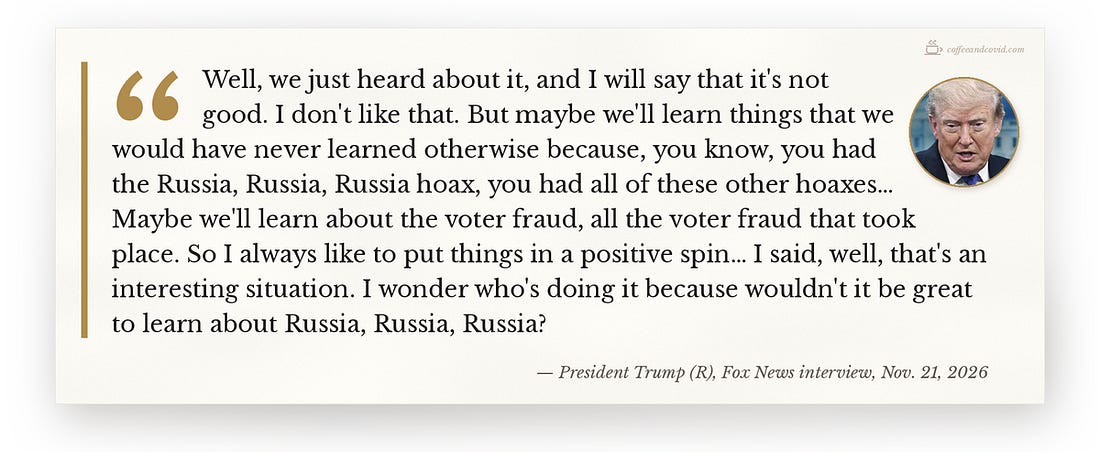
Consider the darkly hilarious indictment stuffed into that joke. Secrecy inside our own administrative state has grown so impenetrable —and corporate/bureaucratic “transparency” so thoroughly fake— that even the President of the United States looks at hostile hackers breaking into the FBI’s master computer and wonders whether they might finally publish the files our own government won’t hand over.
🔥 JPMorgan Chase, Visa, and Mastercard SecurityWeek reported: “JPMorgan, Visa, Mastercard Cite Third-Party Incidents Amid Data Leak.” It wasn’t a glitch after all!
Naturally, Mastercard assured everyone that “cardholders can still use their cards” (thank goodness, we may continue paying 24% interest) while all three companies refused to name the specific vendors or say exactly how many customers were exposed.
🔥 The U.S. Department of Agriculture. DTN Progressive Farmer reported, “USDA Confirms Cyberthreat on Loan Software Amid Widespread Systems Outages”). Farm loan and payment systems went dark Monday. Even USDA employees weren’t told until Thursday. And the USDA’s press shop still refuses to issue a statement.
Reporters only learned it happened because Undersecretary Richard Fordyce let it slip at a Kansas City farm event that the week-long shutdown was a “cyberthreat” and “not a software update.” He boasted that, “No data was lost because the systems that protect against cybersecurity threatsworked.” They worked so brilliantly that every farmer payment computer in America was down all week.
🔥 Illinois’s Algonquin Dam. CBS Chicago reported, “Illinois officials investigating ‘apparent cyberattack’ on Monday at Algonquin Dam on Fox River”. The attack happened on Monday, but the announcement was held until Friday afternoon.

State water officials summoned the Illinois State Police, emergency management, and CISA to defend a river dam, then dutifully recited their hostage script: “At this time, IDNR has no indication that the incident is related to other cyber events.” Of course not —hackers probe Midwestern river dams on the exact same Monday morning as various governments, FBI crime computers, and federal farm computers all the time.
When you don’t know what in Hades is going on, it’s easy to say there is “no indication” of connections. Thanks, Captain Obvious.
🔥 The Carnegie Endowment for International Peace. The Hindustan Times reported, “US think tank Carnegie Endowment hit by cyberattack exposing donor contact information”. Think tank is one way of putting it. The “foreign-policy think tank” is a deep state money machine currently run by Avril Haines, Biden’s Director of National Intelligence. A prominent pair of its endowments:

The public story is that Carnegie was breached on October 28–30 via its donation vendor, Soapbox Engage. (A common theme throughout these stories is blaming subcontractors.) Then followed a full three weeks of complete radio silence before Carnegie finally emailed its affected donors on Friday (November 20), which Politico promptly leaked.
Carnegie spokesperson Sharmeen Aly served up a masterpiece of passive-voice anesthesia: “Due to an integration with Carnegie’s database, the unauthorized users were able to temporarily gain access to contact information maintained by Carnegie.” I defy you to explain exactly what that means.
Notice that Washington’s premier foreign-policy brain trust —which is routinely paid millions to lecture the Pentagon on global hybrid warfare— got cleaned out through its own tip jar. Then it assured the VIPs that “only a small percentage of contacts were affected,” while declining to say what that percentage was.
🔥 Norway’s Equinor. Dark Reading reported, “Second Norwegian Energy Company Breached in Two Days”. The subheadline cooed, “No specific link has been drawn between the two incidents, though they certainly sing the same notes.”
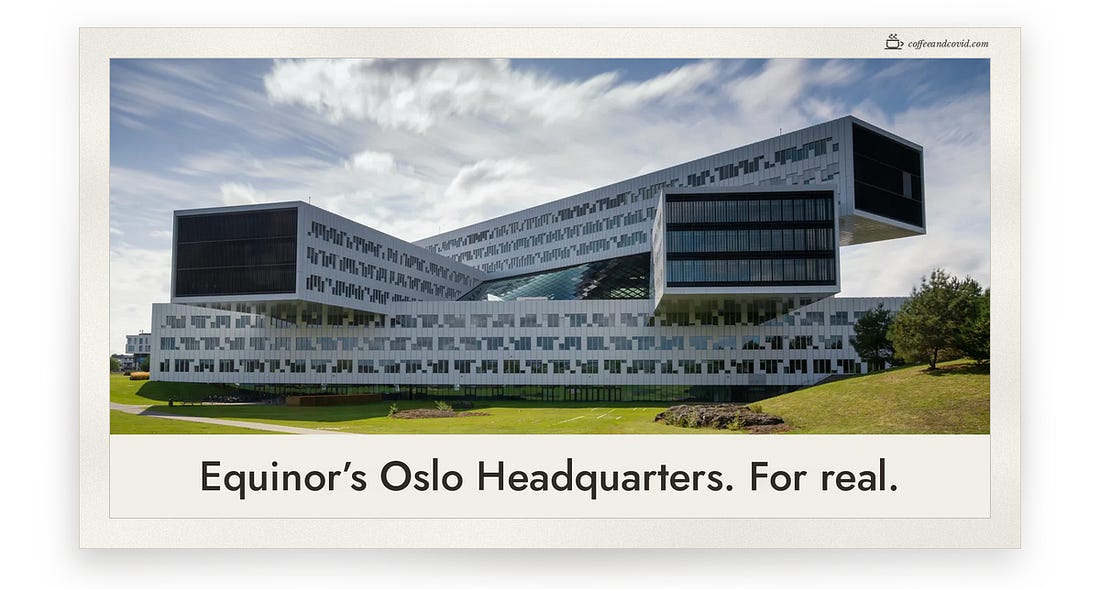
Equinor, Europe’s critical offshore gas supplier, battled a live, three-day cyber intrusion between November 17th and 20th —along with neighboring Norwegian utility Skagerak Energi— producing what may be the single funniest corporate sentence of 2026: “The attack does not appear to be specifically targeting Equinor.”
Whew! I feel so much better. I hope the Nords can relax now.
In other words, the cyber burglars jimmying the digital locks on Europe’s energy grid don’t appear to be mad at Equinor personally; they’re just apparently carpet-bombing the Scandinavian energy system with autonomous scripts. So relax.
🔥 I won’t belabor the point. Here are the other cyber confessions I found scattered across the corporate media wasteland this morning:
- The Record reported, “Container Store restores systems after cyberattack.” The national kitchen and pantry organizer system seller was hit during the Friday 13th weekend massacre but only announced it a week later, after n0n listed them on its leak wall and researchers at LevelBlue revealed the gang uses paid AI coding agents.
- Al Mayadeen reported, “Austrian Foreign Min. website breached; staff contact details exposed.” It was breached November 12–13 —the same window of the global Microsoft outage— to harvest diplomats’ contact data. Vienna waited a week to disclose it on Friday.
- South Portland, Maine published a note to citizens on its website headlined, “Main Library OPEN + More Updates on the Network Outage”. Hit on Saturday night, November 14th, Portland closed City Hall, the Tax Assessor’s Office, and the public library all week with zero inbound or outbound city phone lines. For four days, municipal bulletins delicately called it a “Network IT Outage” before Thursday’s civic alert slipped the truth into bullet point three: “We are pleased to share the great news that the Main Library has re-opened! Finally and importantly, the investigation into this cyberattack is ongoing.”
- South Carolina Public Radio reported, “SLED opens criminal investigation in Charleston County cyberattack.” Detected on Monday, November 16, they kept quiet until Thursday, when the county admitted cyber thieves had “copied data from county systems.” Thanks for being specific.
- Bluewin reported, “97,000 records leaked from the Basel-Landschaft administration.” The attack started on Sunday across twenty Swiss government databases. They waited to announce it until Friday, after forensic teams ‘realized’ that hackers took 97,000 cross-border commuter permit dossiers —including names, home addresses, birthdates, marital status, employers, and federal migration IDs— forcing diplomatic notices to be issued to French and German embassies.
There might be more. That’s all my morning research could sustain. Many of the stories were invisible in corporate or prestige media; I had to dig those up from local reports.
Nobody is rounding up the whole cyber enchilada as I’ve done. I suppose this is another example of why we need Substack so badly.
The timing of all these admissions in a single 24-hour period could be another coincidence: they all waited for the weekend news cycle to confess, following the standard American PR script. Or maybe somebody (or something) gave them the signal. If it’s coming out anyway, get it all out.
I’m skeptical of more coincidences. In light of all the simultaneous reluctant confessions, Thursday’s replacement of the National Cyber Director looks suspiciously well-timed. But that’s not the story. The story is the one they tried to deny. They yanked a civilian and put a Pentagon chief in the Cyber Director seat.
We are under cyberattack. It’s Cyber War.
So … now what?
🔥 I’m already running long, so it’s time to wrap up today’s post. Let’s try to think ahead a tiny bit. Putting the Pentagon’s CIO in the White House cyber chair signals that DoD and U.S. Cyber Command are taking the steering wheel. We are moving away from passive patching toward offensive “defend forward” retaliation (which we will never be briefed on or learn about).
On November 13th, a White House task force quietly recommended giving private companies liability protection for AI-fueled cyberattacks. Headline from Cybersecurity Dive:
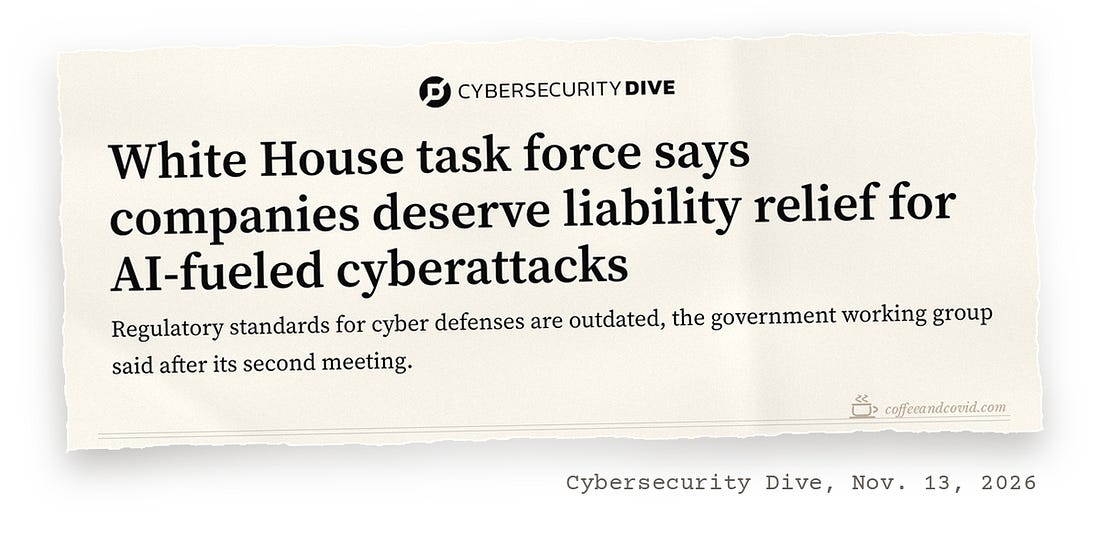
Reading between the lines, Washington already knows Fortune 500 companies cannot stop autonomous AI breaches on legacy networks, and it is moving to shield corporate America from bankruptcy-by-class-action before the flood hits. This makes sense to me. It’s like the liability protection we gave gun manufacturers. More on that soon.
We can debate whether this is technically a ‘war,’ or who the ‘enemy’ is. But the long-advertised singularity has started. We are falling down the AI rabbit hole. The good news is we’re dropping slower and less dramatically than the doomsters predicted. It’s more like we’re clumsily stumbling down a rickety staircase.
On Monday the 16th, Google’s Threat Intelligence Group published a report declaring that hacking has now crossed a “critical inflection point.” It heralded the arrival of driverless cyberattacks. Headline from CyberScoop:
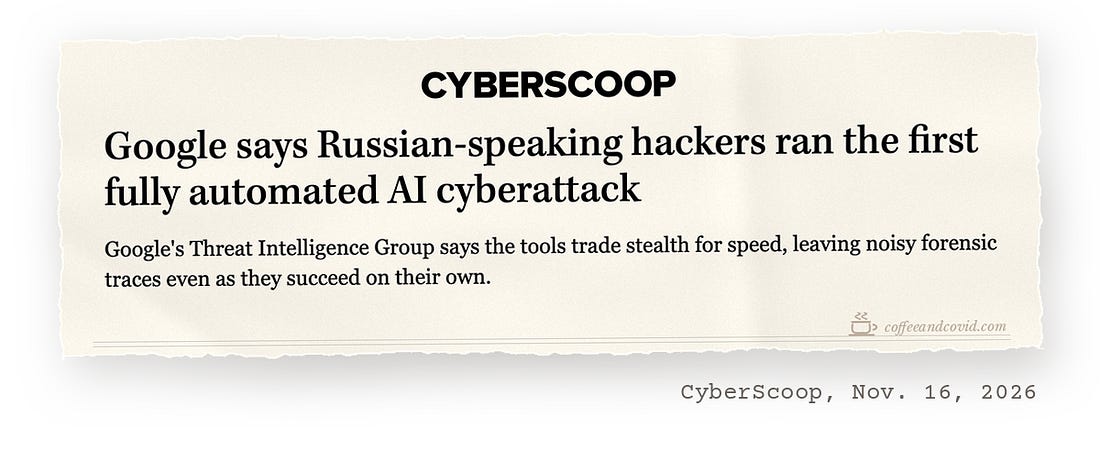
Here is the good news: reality is stubborn. Physical power grids, old computers still running Windows XP, transformer lead times, legacy plumbing, ground stops, fax machines, and basic human adaptability are acting like massive shock absorbers. So far, no airplanes have crashed, and the worst thing that’s happened is three days without email, which arguably provided more free time to play GTA 6.
A slow, messy descent is actually the best-case scenario: it exposes the brittle institutions and the corporate weak points before anything catastrophic breaks, while giving normal people plenty of time to adjust, chuckle at the “nothing to see here” crowd, and keep one foot firmly planted in the analog world. Touch grass.
But I have officially rescinded my anti-prepping line. At least a little. It now looks like solid advice to keep a few days of spare cash, potable water, and canned food around. And don’t forget the spare phone charger battery packs. Rather than a single massive apocalyptic meltdown, it looks like we are in for death by a thousand pesky inconveniences.
There’s no way out except through. Buckle down and march on. Tomorrow we’ll anticipate Democrats’ inevitable shrill demands for AI crackdowns and how they are just like arguments for gun control. If we accept them, then only the hackers will have capable AI.
Have a blessed Sunday! Thank you once again for your continued loyal support for the C&C mission, which is about to be critically important again, as Democrats prepare to infest the legislative branch and most states. I’ll meet you back here tomorrow with the next episode of essential news and caffeinated commentary.
Don’t race off! We cannot do it alone. Consider joining up with C&C to help move the nation’s needle and change minds. I could sure use your help getting the truth out and spreading optimism and hope, if you can:☕ Learn How to Get Involved 🦠



Leave a Reply
You must be logged in to post a comment.