
C&C. DISCLOSURE, OR NOT.
August 31 | Posted by mrossol | Childers, Democrat Party, Disinformation, Liberal Press, Pushing Back, Real Fake News, Transparency[non]| JEFF CHILDERS AUG 31, 2026 |
Good morning, C&C, it’s Monday! Your roundup today is a special edition: a critically important public safety advisory to protect your brain from sneaky political manipulation. We all need this message, now more than ever.
🌍🇺🇸 ESSENTIAL NEWS AND COMMENTARY🇺🇸🌍
🔥🔥🔥
Prepare yourself. You are about to start wondering whether you opened the right blog. I’m going to praise the New York Times for doing some real journalism. On Saturday, the Grey Lady reported, “Influencers Have a Lot to Say About Politics. Many Are Quietly Paid for It.” It was timely, true, well-sourced, and it’s something everybody needs to know right now. It was so bizarre I wondered whether the Matrix was glitching again.
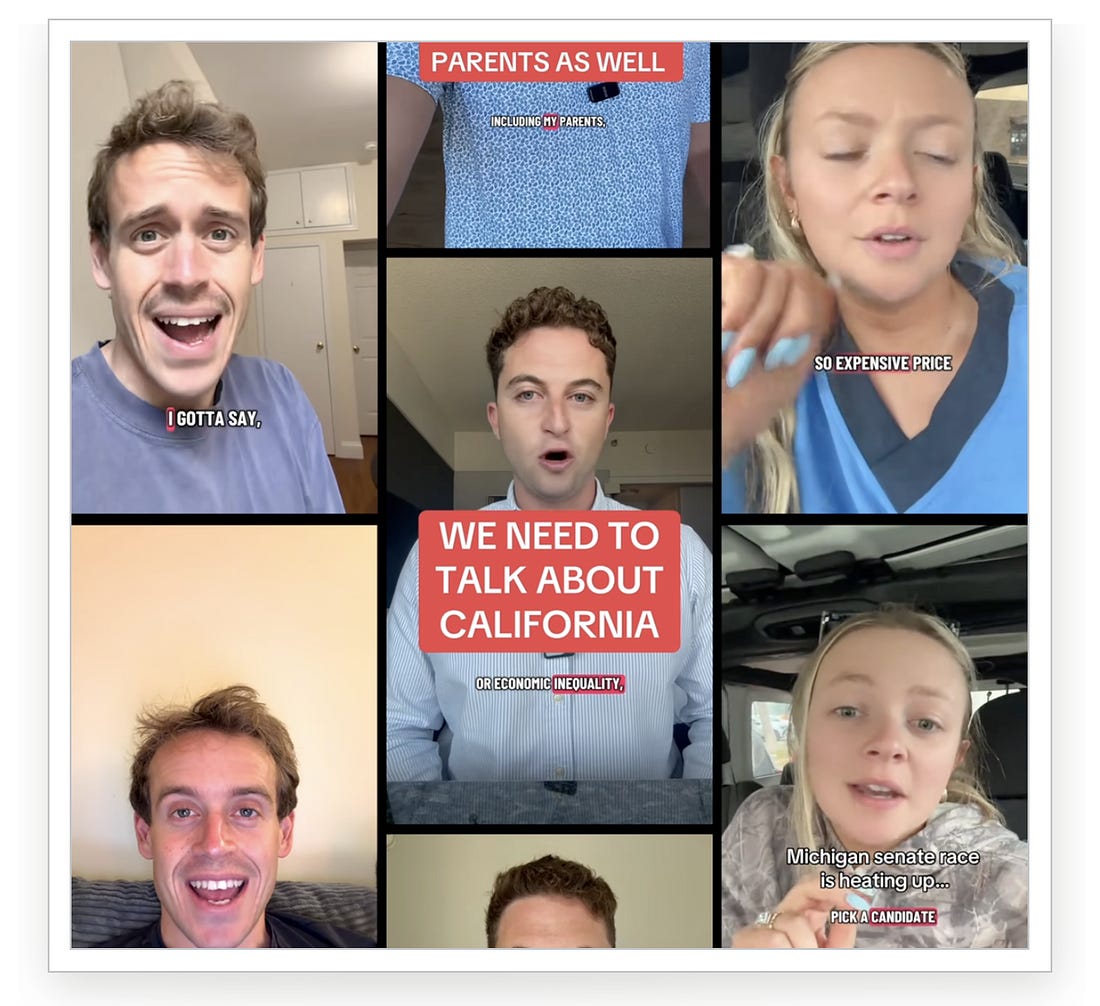
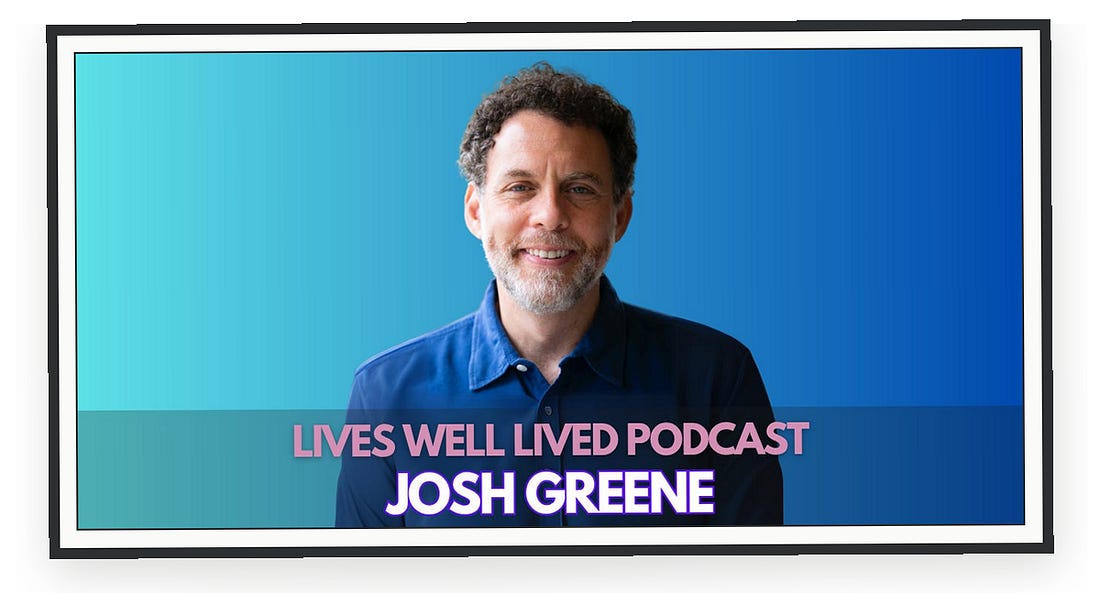
Some, maybe much, maybe most of what you see on social media is fake. “Josh Greene is a rising left-wing social media star with his own podcast,” the Times began, “with nearly 800,000 followers and access to politicians like Senator Bernie Sanders of Vermont and Mayor Zohran Mamdani of New York.” Under his handle @joshtheprogressive, he often advises his viewers who they should vote for.
Josh, who has no credentials and, let’s say, isn’t the biggest USB drive on the keychain, is paid richly to dole out voting advice. But it’s a secret. “He does not always tell his viewers that he is being compensated for his support.”
Don’t blame Josh. Maybe his ethics. But he’s not breaking the law. The FTC requires paid commercial sponsorships to be disclosed —down to a free tube of mascara— but (of course) the rule exempts political content. Eyelash advice is better protected than votes. It’s not the FTC’s fault. The FEC, which regulates election ads, has been asking Congress for permission to regulate paid social media since 2013. Legal election interference.
“With no standards,” Rynn Reed, who runs an organizing hub for progressive influencers, said, “there’s going to be a race to the bottom.” (It is possible we have already reached bottom. But each day brings opportunities for finding forgotten sub-basements.)
Josh Greene is drowning in offers. “I turn down offers every single day,” Josh said, “because I’m not going to take money from anyplace if I don’t agree with it.” A high-minded sentiment, to be sure, but one suspects it includes a certain degree of flexibility. At some point, you’re just negotiating over price.
The story also reported super PAC Freedom PA, which supported socialist candidate Chris Rabb’s successful campaign to win a Pennsylvania House primary in May. It disclosed payments to nearly 50 influencers for “social media consulting,” including Mr. Greene, who got $750 and posted a video celebrating the candidate’s victory. He did not mention the payment.
The reporters also discovered a campaign by a marketing collective called SideShift that paid up to 87 influencers to post TikToks supporting Democrats, including James Talarico, the bizarre Democratic Senate nominee from Texas.
🔥 In the California gubernatorial primary, the reporters found that Tom Steyer alone paid an eye-watering $400,000 to a single TikToker (Carlos Eduardo Espina, 14M followers), and $5,000+ each to 17 more influencers. That’s just the ones they found. It wasn’t easy. It’s an invisible laundromat.
Tom Steyer’s money reached Josh Greene through Group Project, then Gutsy Media, then UnderCurrent Media. Four hops. In any other context, a lawyer would call that laundering; in campaign finance it’s called “subvendor reporting,” and only California requires those kinds of multi-level disclosures.
It’s not just candidate marketing. In June, Kendall Boyle, a Michigan TikToker with only around 21,000 followers, got an email from a marketing agency called Activate HQ. It offered her a “paid opportunity” to post videos about “how rising costs are affecting Michigan residents in real life.” But it also said, “disclosure is not required and the paid partnership label will not be included in any posts.”
Kendall turned it down. She was the only influencer quoted in the story to do so. “It was one of those things where something isn’t fitting right,” she explained. But there’s no way of knowing how many other small influencers took the deal. One suspects it was a lot.
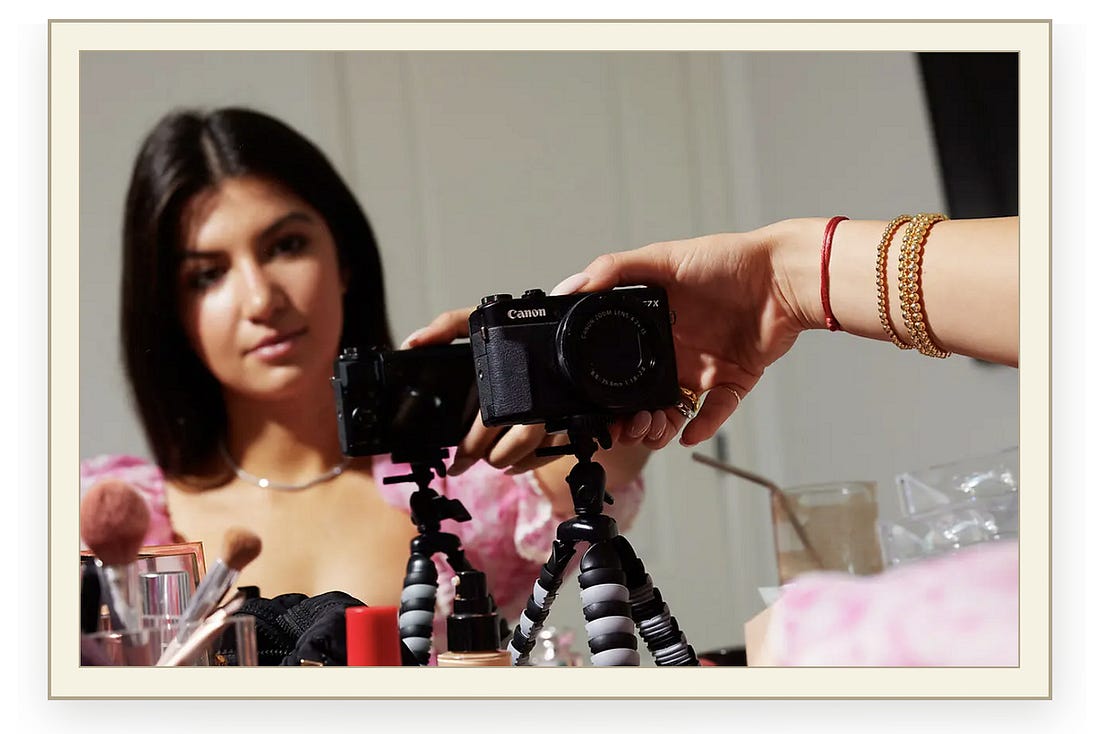
Astroturf used to require plastic grass, a bus, and several burly union laborers. Now it only needs a ring light, a burner account, and a young lady applying her makeup while saying, “Okay guys, I normally never talk about politics.”
🔥 Around this point in the story, my coffee cup dropped from my shocked, nerveless fingers, completely forgotten (except by one startled feline) as I realized the Times was actually digging into murky campaign records trying to connect the dots— and unfavorably to Democrats. The reporters discovered that Mr. Greene, 26, was paid by at least seven liberal politicians (or groups supporting them) in the current midterm cycle, including several congressional candidates in New York and a super PAC linked to DSA darling Abdul El-Sayed, who’s the nominee for Senate in Michigan.
It found that California gubernatorial candidate Tom Steyer paid Josh $21,500. (Tom lost.)
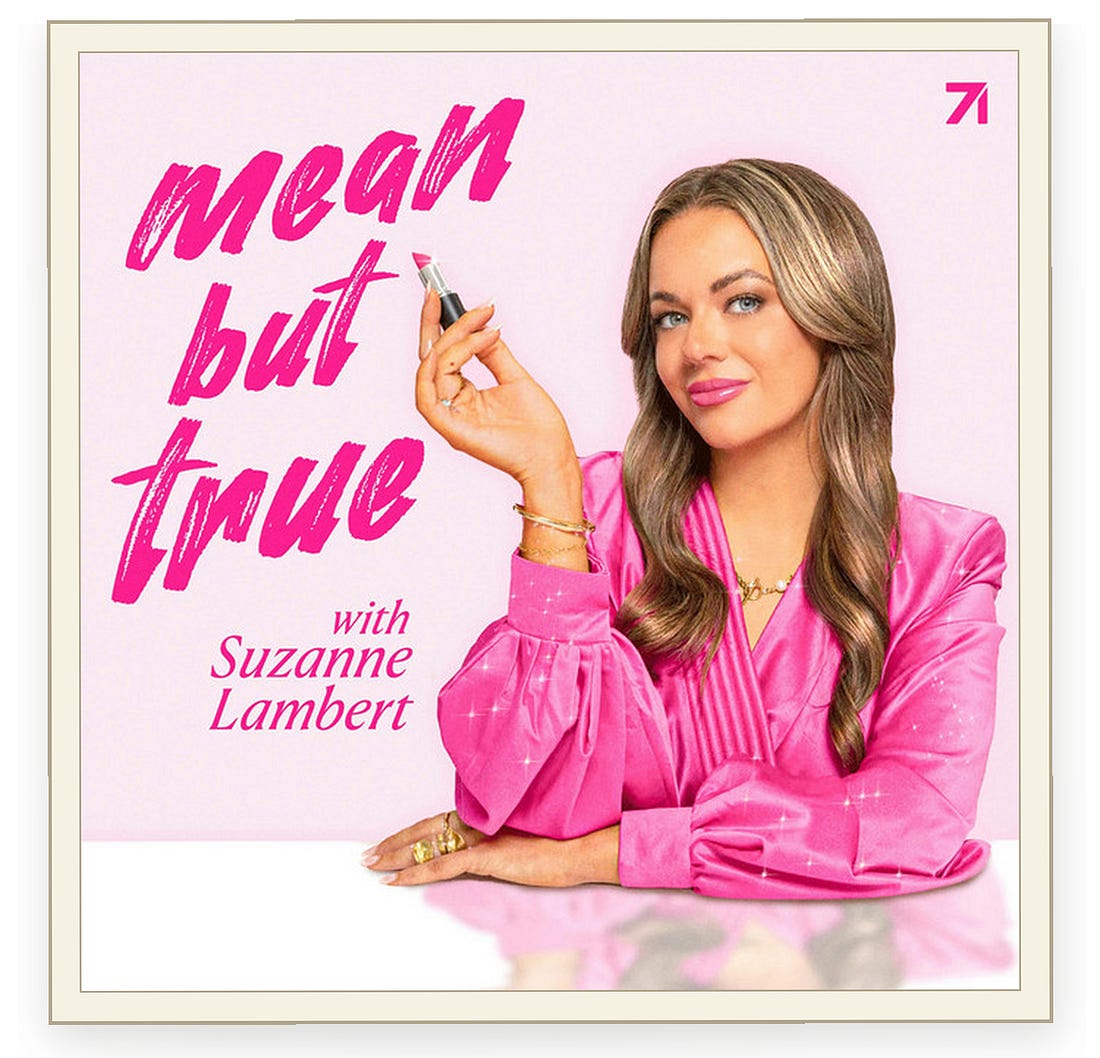
“It’s completely out of control,” said Suzanne Lambert, a progressive influencer and comedienne. “People don’t know what’s real anymore.” You don’t say.
There’s a very good reason the Times exerted itself on this story, which we’ll get to shortly. But still. We must encourage the behavior we want more of. Reporters Ken Bensinger and Stuart Thompson rediscovered the lost art of reporting: they searched campaign-finance filings, traced money through intermediaries, contacted creators and agencies, and compared what influencers said publicly with what campaigns paid privately. The result was actual investigative journalism, a rare and skittish creature normally seen only in archival footage.
🔥 This is the Democrats’ institutional answer to “in 2024, we lost young men to the podcasts”— a sincerity rental industry. But note the five-alarm hypocrisy. After 2024, when Russia Today had covertly routed about $10M to conservative influencers, it was a weeks-long national scandal with a DOJ indictment. But that kind of “election interference” is totally different.
In May, the House Oversight Committee investigated a Sixteen Thirty Fund/Arabella-managed project (George Soros) that paid top pro-Dem influencers up to $8,000 a month, with participants expressly asked not to disclose each other. It’s an epidemic, with a thousand mutated variants.
We can trace the origins of the outbreak to —where else?— the pandemic. The first “paid influencer” story I could find appeared in August, 2021, also in the Times. Like every other poisonous cultural development, the government did it first. The Autopen got the party started.
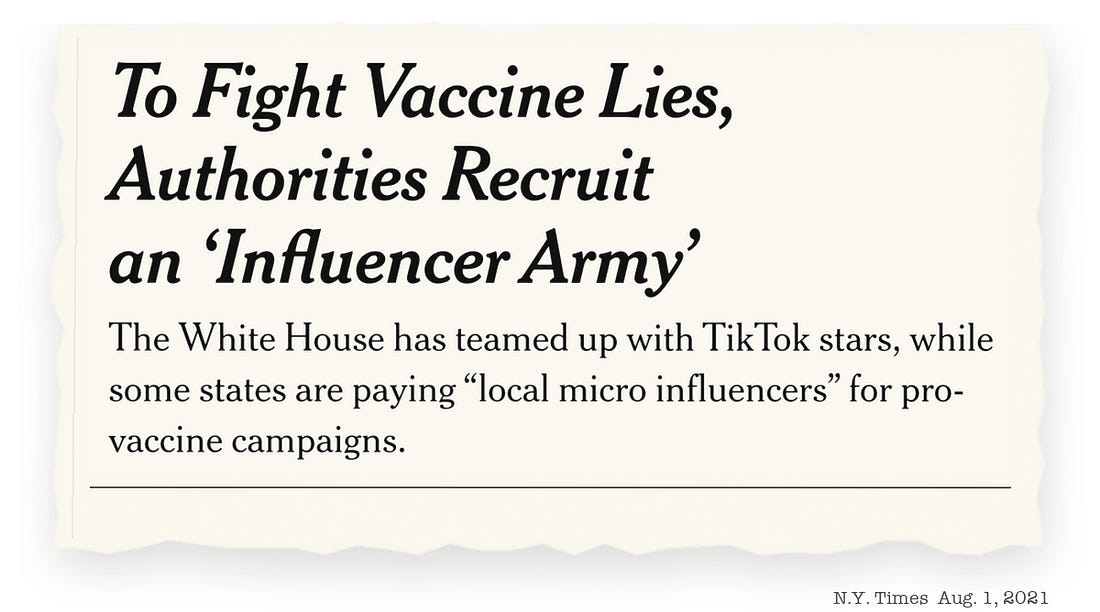
That 2021 story began like Saturday’s, with an influencer anecdote. In June, 2021, seventeen-year-old Ellie Zeiler, a TikTok creator with 10 million followers, got an email from Village Marketing on behalf of … the White House. The Executive Branch of the United States of America wanted the high school senior to talk about vaccines. “There is a massive need to grow awareness within the 12-18 age range,” Village Marketing wrote. “We’re moving fast and have only a few available slots to fill, so please let us know ASAP.”
Five weeks before this article about the Biden Administration’s campaign to influence children to take the jabs by sloshing vast amounts of money to progressive marketing firms and influencers, the CDC had just confirmed the myocarditis signal. Two days before the campaign, a CDC internal slide deck titled “The War Has Changed” leaked. The leaked presentation confirmed that vaccinated people still carried the Delta variant and could infect others. Five weeks after that, Biden announced the first federal mandate.
The psy-wars spread. “All too often, diverse communities are asked to reach out to their communities for free,” said Jessica Bralish, Colorado’s health department spokeslady. “To be equitable, we must compensate people.” Colorado alone authorized $16.4 million of taxpayer money for its “influencer army.” They paid small influencers between $400-$1,000 per month per post. Other states followed suit.
“Equity” has a debit card and a Facebook account.
In 2021, a man named Rob Flaherty created and ran the Biden White House’s vaccine-influencer campaign. He called it a “positive information effort,” which is bureaucrat-speak for “we run an influencer army now.” Guess where he went? He became deputy campaign manager for Biden, then Harris, in the 2024 campaign. He is now a Democrat political strategist and hosts a podcast titled, “Nobody Knows Anything.” Ahem.
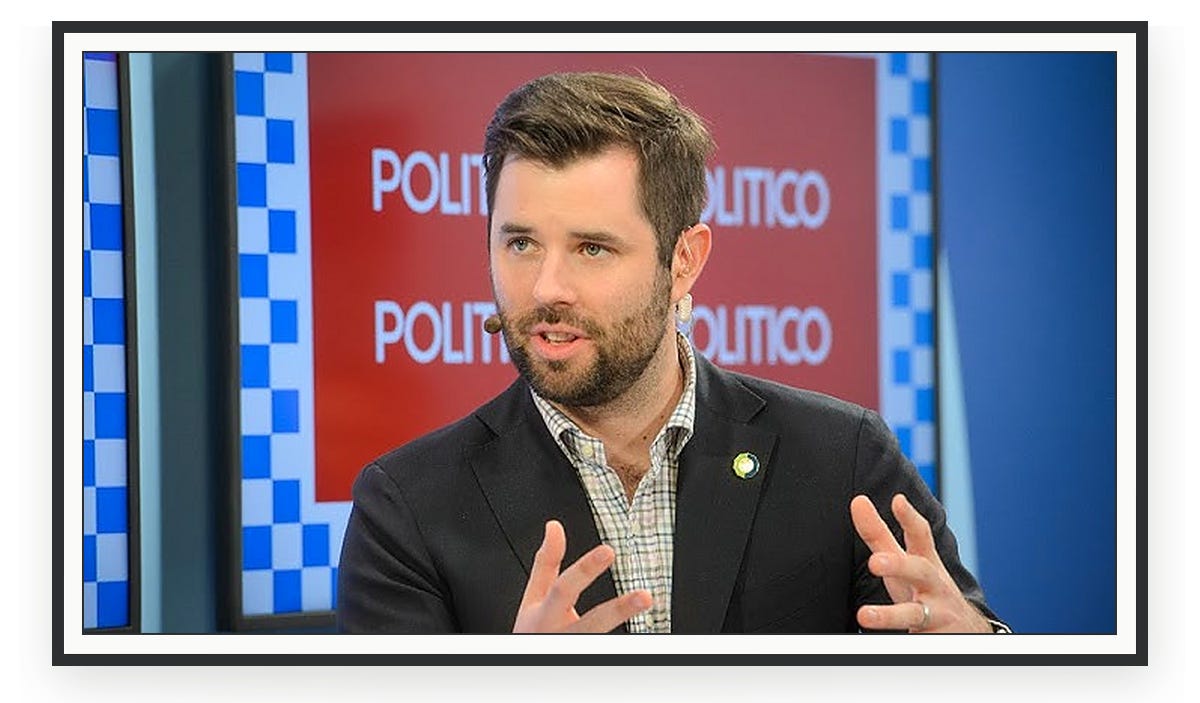
In other words, a brigade of psy-operators honed their techniques using unlimited budgets during Biden’s pandemic excess, and trickled into the Democrat political machine after Trump won. Now they’re doing the exact same thing, except from the outside this time.
When the Times ran its paid-influencer story in August, 2021, it was framed as a clever strategy to “fight lies” and “beat the virus.” It even adopted the Administration’s language of an “influencer army” right in the headline. But “armies” fight “enemies.” The influencer army was fighting an enemy. The enemy was the American people.
Now the Times is starting to get it. Saturday’s article was no longer praise; it was a warning. And the threat is mostly, albeit not completely, coming from the Democrat side of the aisle.
🔥 A few observations. First, there’s nothing inherently wrong with influencers getting paid for promoting products, candidates, or political issues. They built their platforms, so good for them. The trouble is the secrecy. Promoters don’t want to disclose payments because honest opinions are much more persuasive than paid ones. So they lie, by omission.
Second, and more importantly, it’s ruining social media. Everything is fake and gay. As Rynn Reed said, it has become a race to the bottom. In the meantime, always remember the vast infrastructure of paid influence— right down to small accounts with as few as 20K followers. Whenever it suddenly seems like every influencer you’re following is talking about the same issue, there is probably a reason.
I particularly wonder about the MAGA blackpill phenomenon. Allow me to draw your attention to the brief flash of scandal from last March, 2025, when the Bulwark reported that conservative commenters had allegedly been paid to criticize HHS Secretary Robert F. Kennedy, Jr.
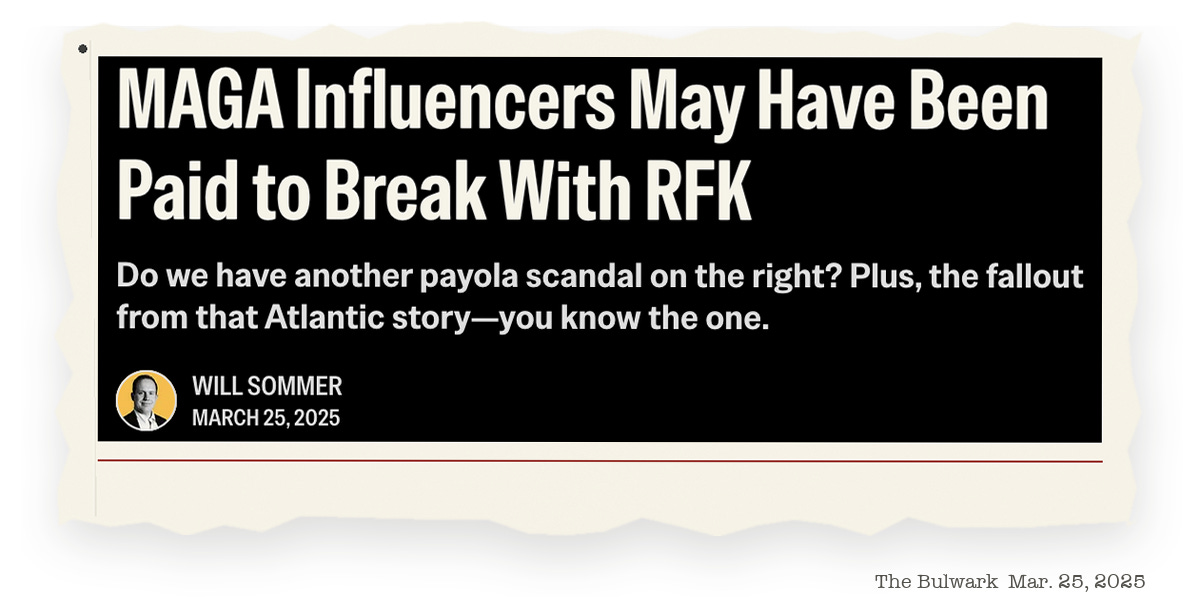
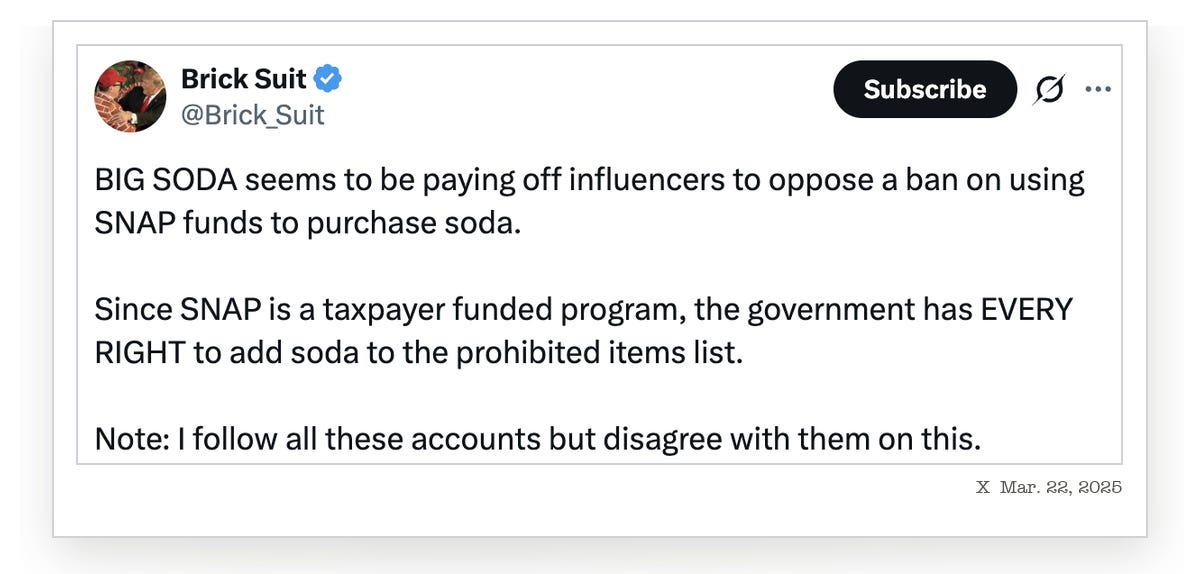
In March, 2025, a wave of conservative commenters suddenly began complaining about Kennedy’s plan to ban food stamp recipients from using government money to buy soda. The complaints came from big accounts like Clown World, but it wasn’t just big names. The sudden wave included lots of minor conservative influencers, like comedian Chad Prather, prolific tweeter Ian Miles Cheong, and Florida pro-Trump personality Eric Daugherty.
Kevin Posobiec (Jack’s brother) tweeted, “Is Mountain Dew nutritious and life-giving? No. But freedom of choice is.” He’s since deleted the post. Conservative poster Brick Suit rounded up all the sudden pro-big-soda posts and said he smelled a paid rat.
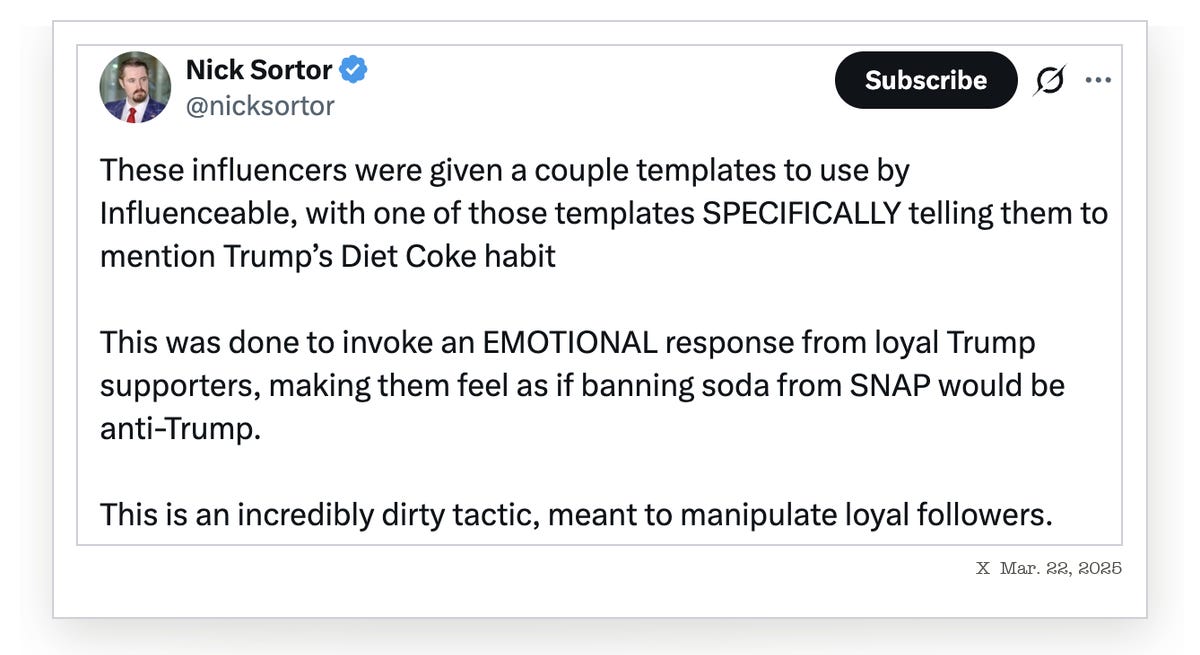
Then Nick Sortor said he’d found documents from a marketing firm called Influenceable giving conservative influencers talking points, like mentioning the President drinks Diet Coke.
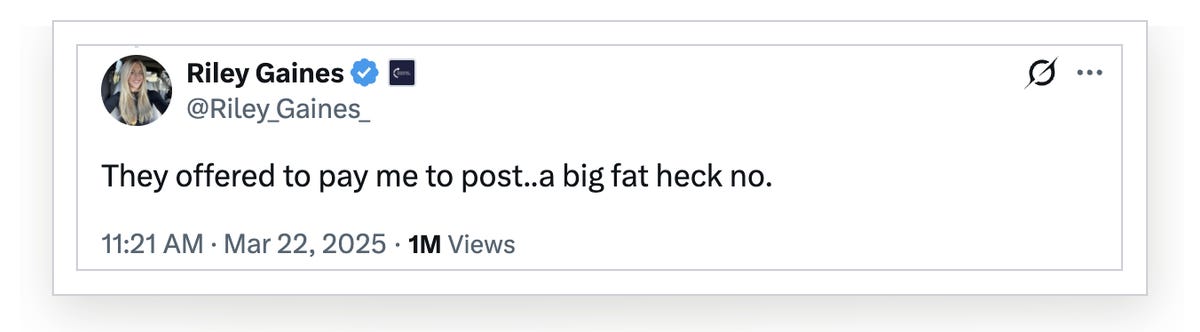
Then, Riley Gaines popped up and confirmed that she’d been offered a soda deal and rightly turned it down.
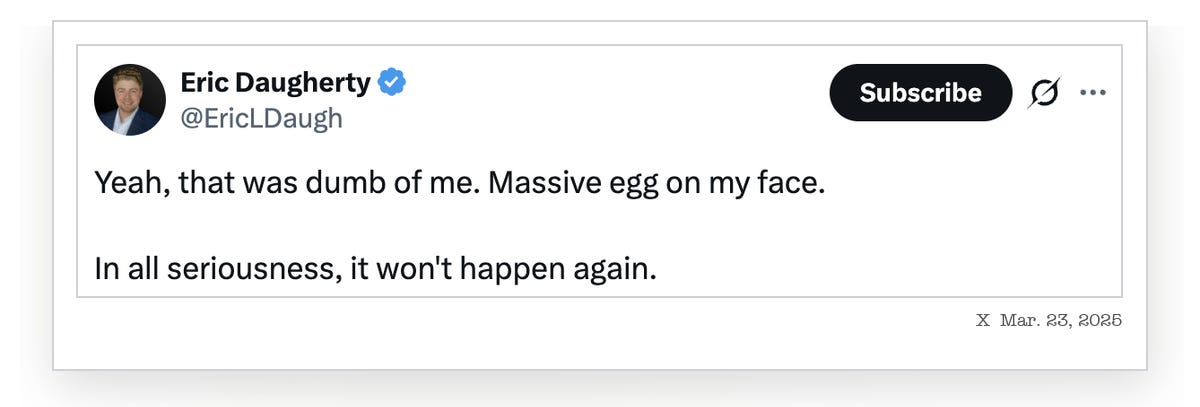
Finally, capping off the whole sordid episode, Eric Daugherty, to his credit, confirmed the story by confessing taking big soda money to attack RFK, and apologized.
Then, just two months ago in July, Time Magazine ran a story headlined, “Trump’s Ex-Campaign Manager Is Running An Israeli Influence Operation Targeting the MAGA Base.” It alleged that former Trump ally Brad Parscale was running an operation funded by Israel that spurred a tsunami of criticism against President Trump from conservative influencers about the cease-fire with Iran. Several republished an Israeli op-ed titled “You Could Have Been the Greatest President of All—But You Failed.” (Parscale denied undermining the President.)
Let me be clear about a few things. I like most of these influencers and am not criticizing them (they already learned a hard lesson). I’m not criticizing Israel for doing the same thing everyone else is doing. But I completely disagree with the notion of taking money to blackpill other conservatives and attack members of our own coalition. I do not punch right, even about this. Punching right is not my job; I’ll leave that to Democrats.
As you know, I believe truth and winning the mind war are the most important things.
The point is, even though the problem is much bigger and more institutional on the left, until this problem is solved, stay off bandwagons. It’s fine to watch them roll by. Avoid the hot takes, as I say so often I should get it tattooed on my neck. We can’t tell right away which influencer campaigns are organic and which are astroturfed.
Because it needs to be said: Coffee & Covid is 100% reader-supported. No bribes. Not even for soda. If the day ever comes when I do take money or any emoluments for writing about something, you will know about it.
🔥 Finally, let’s notice a few more things about this fascinating Times story. Why would they do it, and why now? It absolutely hurts Democrats right before the midterms. For example, Ken Paxton would be well-advised to run some ads explaining that James Talarico’s online support is totally phony.
I doubt the Times was motivated by altruism.
My best guess is that the Times is competing with social media. It resents how social media gets a pass on disclosing paid political content, as it is required to do. When a campaign buys an ad in the Times or any newspaper, federal law forces the “Paid for by” disclaimer. So the Times is required to label the one thing it’s allowed to sell (ad space), while its competitors sell the one thing the Times can’t sell at all —the editorial voice— with no label.
A Times reporter who took $21,500 from Tom Steyer would (probably) be fired by lunch and be the subject of a media column by dinner. Josh the Progressive takes the cash and gets called a creator. It doesn’t seem fair. Josh lacks elite credentials.
In other words, the Times is mad that the Democrat political machine —especially its revolutionary far left— is spending its advertising millions on TikTok and not in the vaunted pages containing all the news that’s fit to print.
I support a disclosure rule. In June, California Democrat Mark Takano and Senator Adam Schiff (D) (ugh) proposed a bill, the Promoting Authenticity with Influencer Disclaimer (PAID) Act, to expand disclosure requirements for paid political messages. No Republicans support the bill, and being generous, I’ll guess that it is a mirage anyway. It would require disclosure only of direct payments from campaigns, not the payments that flush through the laundromat.
It might be easier to fix through the states than in Congress. Until then: read skeptically, stay off bandwagons, and remember the going rate. When everyone you follow discovers the same outrage on the same Tuesday, look for receipts. But rest easy: you’ll always get the truth here. All C&C opinions are uncompensated. I don’t even like soda.
Have a magnificent Monday! Return in the morning tomorrow, for another table laden with delicious essential news and caffeinated commentary.
Don’t race off! We cannot do it alone. Consider joining up with C&C to help move the nation’s needle and change minds. I could sure use your help getting the truth out and spreading optimism and hope, if you can:☕ Learn How to Get Involved 🦠




Leave a Reply
You must be logged in to post a comment.