
Biden Admin Weaponized USAID
November 25 | Posted by mrossol | 1st Amendment, Biden, Censorship| MICHAEL SHELLENBERGER NOV 25∙PAID |
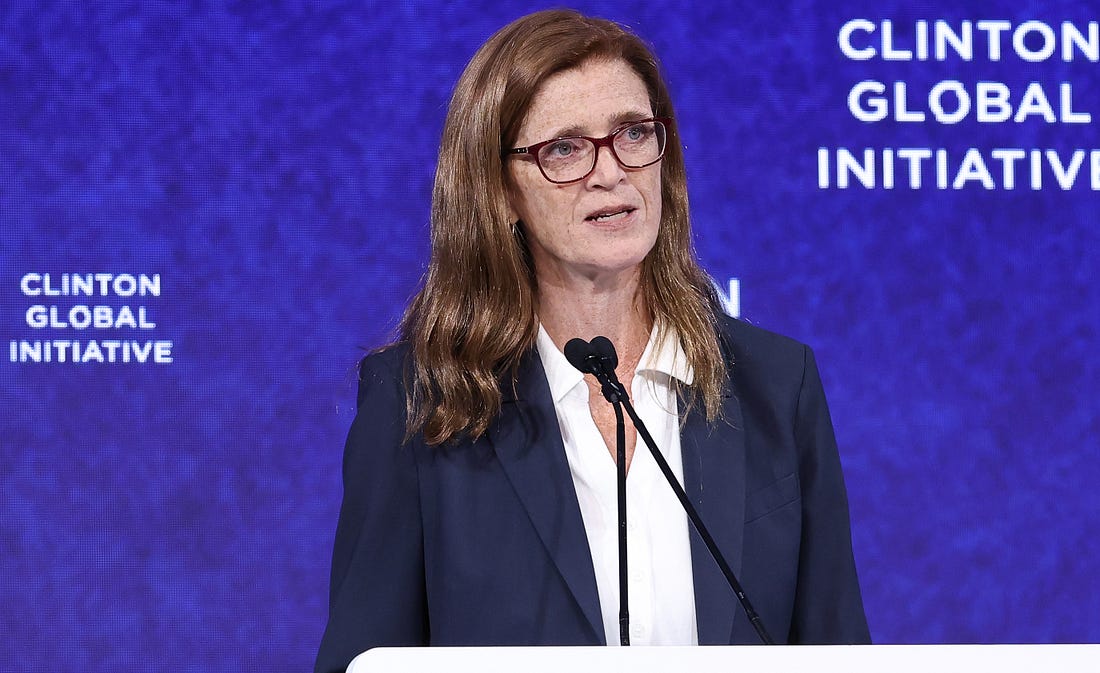
For years, the US Agency for International Development (USAID) insisted privately and publicly that it did not coerce social media platforms into censoring content. The agency characterized its work as support for independent media and fact-based information in poor countries. After Jim Jordan, the House Judiciary Committee Chairman, asked USAID for documents, the agency sent a response letter saying it works exclusively overseas (injunction-and-content-moderation-talking-points-for-the-committee-folks). “USAID doesn’t badger tech companies,” claimed Chioma Ayogu, a lawyer in the agency’s General Counsel office, in July 2024 talking points released late yesterday in a trove of newly released USAID files.
But a review of the 244 newly released USAID files reveals a vast, previously unknown censorship effort led by Biden-appointed USAID Administrator Samantha Power and the Biden White House’s National Security Council (NSC). The agency directly demanded control over social media censorship and more power for its grantees to censor. “SP [Samantha Power] pushing hard for us to get an interagency process going on how the USG [US Government] can get a LOT better at this,” wrote Colin Thomas-Jensen, national security director in Power’s office, in a January 2022 email.
Much of the effort focused on successfully urging platforms to use USAID grantees as “Trusted Flagger” censorship organizations. “Meta has accepted a number of organizations from Moldova into its trusted partner program,” a USAID official noted in December 8, 2022.
USAID sought to build on a State Department’s Global Engagement Strategy of “debunking and discrediting” their ideological enemies. “A ‘counter-brand’ approach, which involves discrediting the ‘brand’ — the credibility and reputation — of those making false allegations.” This included “Changing the frame from the false allegation to the misdeeds and lack of credibility of those spreading disinformation” and “Creating moral outrage…”
USAID’s Josh Machleder, then its Senior Advisor for Media and Internet Freedom, discussed “requiring social media platforms to hire digital forensics experts and actual media representatives so there’s some teeth behind policing content on their platforms” during a webinar.
USAID sent aggressive emails to platforms. Asked a USAID official in an October 21, 2022 email, “Can you provide examples of harmful content that has been taken down or individuals/groups that have been de-platformed in Central America… What more can be done?”
USAID was often trying to change behavior, particularly around voting. In an August 6, 2021 meeting with Facebook, USAID asked, “Is there specific information that can affect Filipino behavior?”
The files show USAID administrators seeking to make censorship a core activity of its grantees and contractors. USAID executive Lorri Anne Meils, in a video, described “bringing in the fact-checking piece to debunk information in a way that aligns with the objectives of government partners.”
USAID sought to pay social media companies for censorship programs through “burden-sharing arrangement switch social media platforms to address these harms by financing activities to mitigate them” (Joshua Machleder to Lorri Anne Meils, Jan 24, 2021). USAID executives discussed pressuring Facebook to spend more on censorship. Said Meils, “there needs to be some way higher leverage to squeeze cash out.”
USAID employees regularly lamented that their censorship was not sufficiently totalizing. In its 2021 “Disinformation Primer,” USAID wrote that “while it is possible to take down or remove the worst posts, for every post taken down multiple mutations of the original disinformation will take their place.”
The Primer lays out much of the strategy within censorship legislation that just became law in Australia. “I think we want to see a little bit more about how their algorithms work and subject those algorithms to more audits,” said Machleder in the webinar connected to the Primer’s release.
USAID’s Censorship Partnerships
USAID’s censorship partnership strategy dated back at least to 2013. In June of that year, USAID’s Andrew Sweet emailed Facebook and explained that it wanted to be more involved in “Assisting Facebook to identify, in countries where we work, elements utilizing the platform in violation of FB’s Terms of Use in order to promote violence and hate speech.” On May 1, 2013, a USAID executive sent an email where he said, “The Sri Lanka team has sent Facebook a list (in most egregious order) of offenders for Facebook to remove after it is determined that the content violates their terms of use.”
The files show that these efforts intensified after Power became Administrator of the agency in 2021. That year, USAID sought to create a global censorship regime in response to “information disorder” created by too much free speech online.
On May 14, 2021, USAID’s Joshua Machleder emailed Facebook’s Mike Bradow in 2021 a “draft document that provides an exploratory look at what a more formal partnership between USAID and Facebook might look like on content policy issues in contexts where USAID is working.”
The memo, titled “Partnership Language for USAID – Facebook,” describes USAID’s goal as “streamlined access to Facebook tools, training and trusted partner networks that address information integrity and content that has potential to harm.” The memo also says it wants its grantees to be involved in “the generation of content to be highlighted on Facebook’s Info Centers (i.e. Climate Science Info Center, Voting Info Center, Covid Info Center).”
The demands were not always for more censorship. Sometimes USAID demanded that companies lift censorship on their grantees. Machler on June 21, 2021, emailed a Facebook executive to share an email from a USAID grantee complaining that Facebook had censored its page. The group was a “well-respected US-backed organization,” noted another USAID executive. The group complained that Facebook had rejected its appeal, prompting USAID to intervene directly.
Other files show how USAID demanded censorship directly if social media platforms didn’t comply with demands from its grantees. “USAID/DC can elevate specific cases that have exhausted the official appeal process (e.g. BelSat) back to Meta for further review,” wrote a USAID executive in a memo.
Social Media Companies Collaborated
The documents show the platforms mostly cooperating with USAID’s censorship efforts. Weeks after Elon Musk had taken over Twitter and begun reducing censorship, Google, in a December 7, 2022 meeting, said it was considering excluding Twitter from its search results.
On January 6, 2022, a USAID executive said he proposed that Facebook create “special access for USAID partners to various FB perks (ad credits, audience data, etc etc), and expanding content moderation [censorship] to places FB doesn’t adequately cover… Brian [Rice of Facebook, a former John Kerry staffer] was extremely positive on all three.” In April, Rice and two other Facebook executives joined Facebook’s senior executive Nick Clegg in a meeting with Power and her senior leadership.
The files show no instance of a social media company raising First Amendment or free speech concerns.
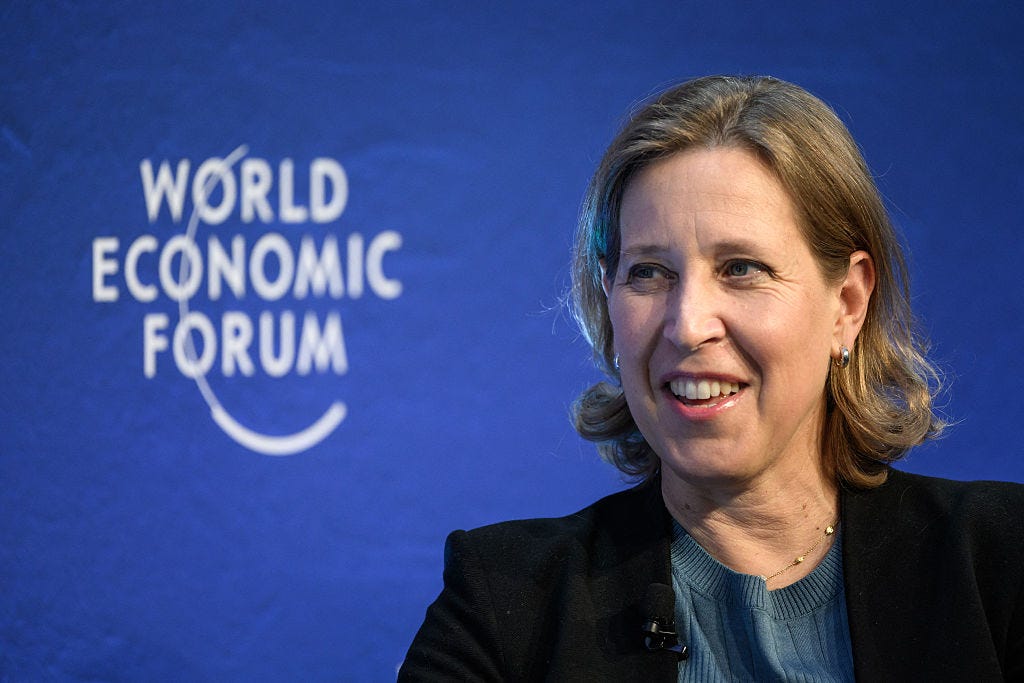
On April 13, 2022, YouTube CEO Susan Wojcicki sought a meeting with Power “to discuss a range of critical issues of mutual interest including: access to information globally; combating misinformation and disinformation globally, as well as YouTube’s positive economic, social and civil impact, in democracies, as well as in closed and illiberal societies across the world.”
Two days earlier, a Google executive emailed several documents to USAID executives. One was a “Google/YouTube transparency report and specific section on content removal and misinformation.” Another was a YouTube White paper, which said that “Our approach to responsibility” is to “Remove content that violates our policies as quickly as possible” and “Raise up authoritative voices when users seek breaking news and information” (“Rethinking the Freedom and Transparency Act”), which were the two main goals of USAID. YouTube said it used AI to “Minimize risk of user exposure to problematic content…”
On July 19, 2022, a USAID executive emailed one of its grantees, Internews, to say that “Youtube is seeking to collaborate with USAID on supporting investigative journalism and influencers to counter information disorder through small grants, capacity building and utilizing its platform to reach diverse groups of individuals.”
On May 11, 2022, USAID asked Google if it was “noticing any changes in user behavior, such as platform hopping or VPN use, and how can we share those insights with our partners to pivot where they are placing content?” It asked for “the best point of contact” to “Escalate the review of content that undermines human rights and safety.”
Meta’s “Trusted Partner Program” and YouTube’s “Trusted Flagger” program work with supposedly “non-governmental” groups that demand censorship from the company.
The files show that a USAID grantee called “Internews,” played a central role in the censorship effort. Rafiqu Copeland from Internews wrote to USAID executive Machleder on August 5, 2022, to say, “We have been trying for a couple of years now to get Meta to improve their Trusted Partner program to make it responsive to partners’ needs.”
“I am extremely interested in speaking with YouTube about their Trusted Flagger program,” Rafiqu Copeland of USAID contractor Internews told USAID senior executive Joshua Machleder in an August 17, 2022 email, “and seeing if Internews could again consider membership… We have social media monitors in about 20 countries, so it would be a good fit.” One day later, Machleder replied that YouTube asked him to send over a list of groups they wanted to become “Trusted Flaggers.”
The efforts paid off. On September 22, 2022, Machleder emailed Internews to say, “There has been movement on a potential USAID-Internews-YouTube partnership… As this is a first for USAID and YouTube, YouTube views this as a pilot activity that could potentially be scaled up in the future based on how it plays out.”
Within two years, the files were proactively seeking USAID guidance on what to censor and how. In an April 9, 2024 memo describing a meeting, a Meta representative reportedly said, “We have noticed a growing trend of inflammatory language posted on our platforms. What does USAID think should be done about it?”
Military and IC Links
The files show how USAID worked closely with the military, State Department, and intelligence community (IC) to advance US foreign policy interests. “We run the USAID relationship with DOD and our folks in DC, the Pentagon, and at each of the COCOMs are working on USAID and DOD interests in this disinformation/techology/security/governance space every day,” explained the director of USAID’s Civilian-Military Cooperation.
“Each of these team members is working on these issues every day — and supporting the USAID teams at the combatant commands who are focused on civ-mil efforts in the field.
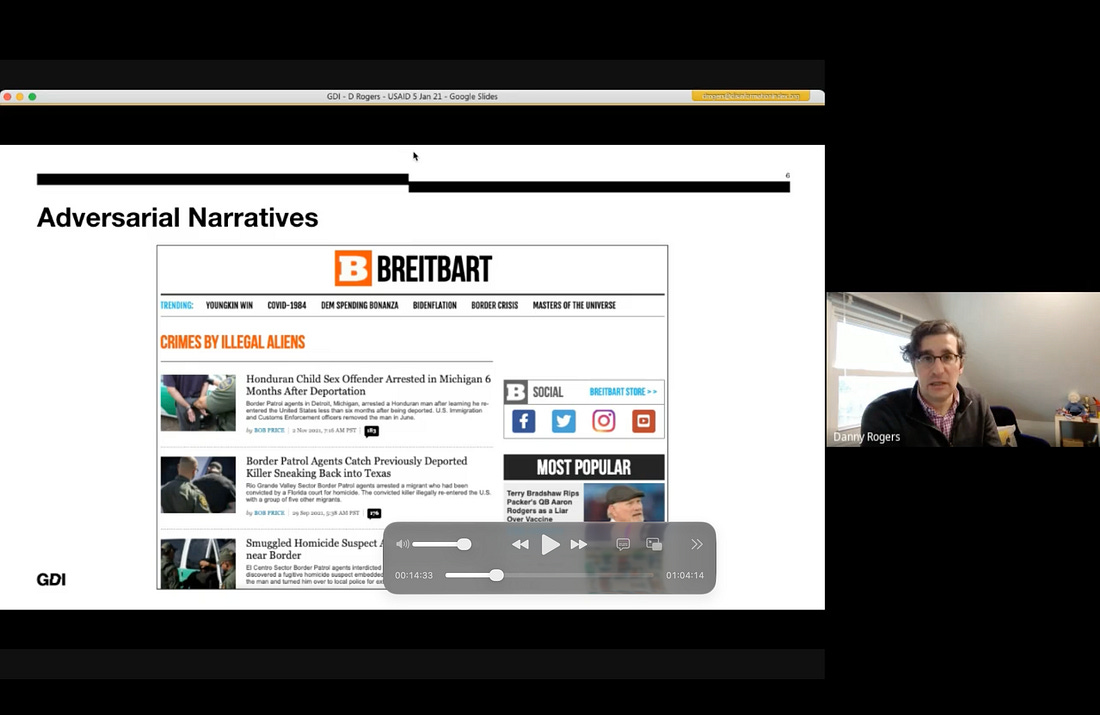
On June 10, 2022, someone from the Office of the Director of National Intelligence (ODNI) introduced a USAID executive “building out a portfolio around countering misinformation” to the Global Disinformation Index (GDI), a US government-funded effort that successfully got advertisers to stop funding conservative news organizations.
In its August 2022 presentation to USAID, GDI said it had gotten its blacklist of “2500+ worst offending disinformation sites… embedded in the systems of thirteen global ad tech companies, including IAS, Peer39, and Oracle (three of the key players). Subscribers to this GDI tool are able to block these domains from their online bidding systems and divert clients’ ad spend away from disinformation content.”
In his talk to USAID executives, GDI’s Daniel Rogers, a former intelligence community operative, made the case for cutting of ad revenue to Breitbart news website because it covered crime by immigrants. Rogers proposed expanding the GDI’s censorship efforts to more nations.
“USAID has indicated that its growing relationships with the large online platforms, including Alphabet and Meta, offer an opportunity to take action in these three countries…” Specifically, Rogers proposed to “Work with platforms to defund high disinformation risk media… downrank this content…[and] block or eliminate the most egregious disinformation peddlers…”
One month later, a USAID executive, Meral Karan, emailed a colleague to say she wanted to follow up with Rogers “as their research on the economic motivations around disinformation are really interesting and I’d like to learn more.”
USAID proposed to create an “Information Resilience Council to “convene and coordinate MDM [mis/dis/malinformation] related activities across the Agency,” and in August 2022 two USAID executives discussed “announcing publicly that we have (in whatever terms) a disinformation coordinator.”
In October 2022, USAID asked Facebook to train its grantees in Libya to better learn “media strategies and audience engagement.”
Legal Anxiety Over Free Speech
The files reveal anxiety from USAID’s office of the General Counsel (GC) around free speech issues. “USAID employees and contractors should only request content be removed, retained, posted, or promoted consistent with the social media company’s policies,” said the GC in a September 27, 2024 “FAQ on Communications with Social Media Companies.” It said to “Avoid actions that could be considered ‘coercion’ or ‘significant encouragement to act in accordance with USAID’s wishes or content moderation requests.”
The person added that, “Due to First Amendment legal considerations, any USAID work in this space must be viewpoint neutral. USAID cannot be perceived to be policing public opinion or categorizing all negative views of USAID’s work as misinformation… there has been intense Hill scrutiny on work to combat disinformation or information manipulation.” The memo referred to a letter from Rep. Jim Jordan, Chairman of the House Judiciary Committee.
The memo warned of a “hypothetical example” where USAID officials “have all called Meta to the carpet over the same trusted partners program over the past few months it helps fuel the narrative – Why is USAID still asking unless the intent is to coerce the tech company to do something. That is, USAID says it is not coercing tech companies, but do its actions say otherwise?”
Added the GC office, “Do not write, ‘this is too sensitive to discuss over email,’ ‘this is highly sensitive, we shouldn’t put any of this in writing,’ or ‘not to be shared further.’… If in doubt, pick up the phone.”
USAID officials got the message. In 2022, Vera Zakem, the agency’s chief digital democracy officer, wrote, “We need to get through the midterms without any leaks!”
During a 2023 call with the State Department, USAID and the NSC, YouTube executives asked the government officials for examples of channels they found most problematic. Someone in the meeting notes wrote, “Need to be careful this is not construed as USG-requested content removal.”
By September 7, 2023, USAID told its staff to get itself out of the conversation between platforms and its grantees. “Encourage direct collaboration between platforms and partners, so we are not part of the conversation,” one note said. “Content moderation referrals are different than content moderation direction,” it added.
The concern was warranted as USAID officials knew they risked violating free speech rights. A February 22, 2022 memo to Power said that intelligence and Justice Department officials wanted no role “when purely domestic actors engage in disinformation.”
And the State Department had rejected a USAID proposal to give platforms a list of trusted Russian-language outlets “because of concerns about representing specific actions or actors to receive special treatment as the U.S. government, raising freedom of expression issues.”
USAID’s own trainers raised the same problem. “If you empower a democratic government to take down stuff which is happening online, how, how do you make sure that you don’t empower undemocratic governments to do the same thing?” asked a presenter.
But the GC office affirmed USAID’s strategy of “partnering” with platforms on censorship efforts. “USAID may develop informal or formal partnership… with social media companies,” it wrote in the memo.



Leave a Reply
You must be logged in to post a comment.